2026 Best UVLED Flatbed Printing Options for Your Needs?

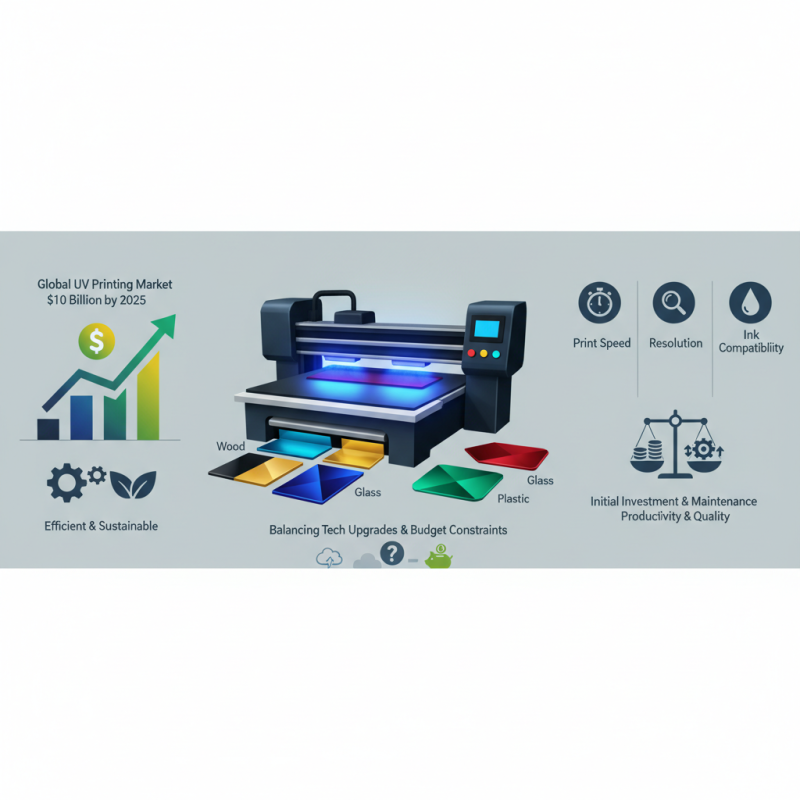
The UVLED Flatbed Printing market is rapidly evolving and gaining traction. According to a recent report by Smithers Pira, the global UV printing market is projected to reach $10 billion by 2025. This growth is driven by the increasing demand for high-quality printing solutions. Businesses are seeking efficient, sustainable options that meet customer needs.

UVLED Flatbed Printing offers versatility across various substrates. It allows printing on materials like wood, metal, glass, and plastic with incredible accuracy. The technology utilizes UV lights to cure the ink instantly, ensuring vibrant colors and durability. However, the initial investment and ongoing maintenance costs can be challenging for some companies.

As we look to 2026, the options available in UVLED Flatbed Printing will likely expand. Companies must consider factors like print speed, resolution, and ink compatibility. An informed choice can enhance productivity and quality. Yet, with so many options, it’s crucial to weigh benefits against potential limitations. Balancing technology upgrades with budget constraints can be a daunting task.
2026 Best UVLED Flatbed Printing Options for Your Needs?

Overview of UVLED Flatbed Printing Technology

UVLED flatbed printing technology has transformed the way we print on diverse materials. This process uses ultraviolet light to cure the ink as it is printed. It allows for high-quality images and precise details on surfaces such as wood, glass, and metal. The versatility of this technology is impressive. It caters to a range of industries, from signage to packaging.

One significant advantage is the eco-friendly nature of UVLED printing. Unlike traditional methods, it emits fewer volatile organic compounds. This makes it a safer option for both operators and the environment. However, it’s essential to recognize that not all UVLED printers are created equal. Some may struggle with ink adhesion on specific surfaces. This can lead to issues like cracking or peeling over time.

The initial investment for a UVLED printer can be high, which raises questions for small businesses. While the long-term benefits are evident, staying informed about operational costs is crucial. Regular maintenance and quality control also matter significantly. These factors can impact print quality and machine performance. Finding the right balance in a UVLED flatbed printer is key to achieving the desired results.

Key Factors to Consider When Choosing a UVLED Flatbed Printer

When choosing a UVLED flatbed printer, several key factors come into play. Print quality is paramount. Look for printers that promise a high resolution, ideally above 1200 DPI. Reports indicate that a significant portion of buyers, about 72%, prioritize print clarity. This is especially essential for businesses needing detailed graphics or fine text.

Speed is another crucial consideration. The best UVLED printers can offer speeds ranging from 20 to 50 square meters per hour. However, the right speed depends on your specific workload. If you require high volume, choosing a faster model could be beneficial. But remember, faster isn’t always better. Sometimes, high-speed models compromise on color accuracy and detail.

Moreover, flexibility in material handling matters. Many flatbed printers can handle a variety of substrates, from wood to metal. Data shows that businesses using versatile equipment see a 30% increase in overall productivity. However, it’s essential to reflect on the type of materials your business frequently works with. Not every printer excels across all substrates, and choosing the wrong one can lead to significant setbacks in production efficiency.

Top UVLED Flatbed Printers of 2026: Features and Benefits

As we look into the top UVLED flatbed printers of 2026, a few key features stand out. Many models offer exceptional versatility. They can print on various materials, including wood, glass, and metal. This flexibility is crucial for businesses needing to meet diverse customer demands. Enhanced color accuracy is another significant benefit. Advanced printing technology ensures vibrant and detailed outputs.

However, there are considerations to keep in mind. Some users find the learning curve steep. New operators may struggle with calibration and settings. Regular maintenance is essential to ensure optimal performance. Dust and build-up can affect print quality. Therefore, investing in training is vital for success.

Another factor is energy consumption. While UVLED printers are generally more efficient, they still require attention. Companies may need to analyze their energy costs over time. Additionally, not all models are suitable for heavy-duty applications. It’s important to assess your specific printing needs. A printer that excels in one area might fall short in another. Balancing features with actual requirements is key to making the best choice.

2026 Best UVLED Flatbed Printers Comparison

Cost vs. Performance: Evaluating Your UVLED Printing Options

When evaluating UVLED printing options, cost and performance are crucial factors. Budget constraints may limit your choices, but quality shouldn't be sacrificed. Some printers may offer lower prices yet compromise on print resolution or speed. It’s essential to balance these aspects. For instance, a machine that costs less may not last as long, incurring higher maintenance costs later.


Performance also involves understanding the types of materials you plan to print on. Some printers work well with rigid substrates, while others excel in flexible media. Selecting a printer that matches your needs can be challenging. Consider your volume requirements too. A printer may perform well under heavy usage, but its speed might be inadequate for smaller jobs. Documenting your specific needs will help in this reflection.


Think about the long-term implications of your decision. A cost-effective choice now might not serve well in the future. Print quality is an area that deserves careful consideration. Low initial investments can attract many buyers, but they often mask performance gaps. Conducting thorough research, including user reviews and sample prints, is vital for making an informed choice. Ultimately, the printer should align with your operational goals and budget.

Maintenance and Support for UVLED Flatbed Printers in 2026

As the demand for UVLED flatbed printers continues to grow, the importance of proper maintenance and support becomes clear. Data from industry reports indicate that 70% of printer downtime results from inadequate maintenance. Regular upkeep can prevent most of these issues. Simple tasks, like cleaning print heads and checking alignment, can greatly improve performance.


Technological advancements are leading to sophisticated troubleshooting systems. These systems often include real-time monitoring. This development helps technicians address issues proactively. Nevertheless, many users still overlook software updates. Failing to do so can diminish print quality and increase downtime. Achieving optimal functionality requires more than just hardware investments.


Support networks are increasingly crucial for businesses. Many operators benefit from on-site training and technical assistance. Industry studies show that companies utilizing comprehensive support see a 30% improvement in productivity. Yet, reliance on external help can be a double-edged sword. It may slow down internal skill development. Balancing between external support and in-house expertise could lead to more robust operations.