 English
 Español de México

2026 Top Oil Tank Types for Global Buyers?
Choosing the right Oil Tank in 2026 will require more than comparing capacity, price, and delivery time.
Global buyers face changing crude grades, stricter emissions expectations, and uncertain shipping patterns. The International Energy Agency’s Oil 2025 report expects global oil demand to approach a plateau near 105.5 million barrels per day by 2030. That outlook still supports substantial storage needs, especially near refineries, ports, and strategic distribution hubs.
Tank type matters.
Fixed-roof tanks remain practical for many stable, low-volatility products. External floating-roof tanks can reduce vapor losses in larger crude and petroleum storage applications. Internal floating-roof designs offer additional protection where weather exposure and emissions control are concerns. Double-wall tanks may provide stronger containment for selected fuels, although they demand higher investment and careful inspection.
As Peter Davidson, former chief executive of the Tank Storage Association, has stated, “Tank storage is a critical part of the energy supply chain.” That principle remains relevant. A storage terminal is not merely a row of steel cylinders. It is a working system of valves, pumps, meters, fire protection, monitoring, and maintenance records.
The American Petroleum Institute’s API 650 standard remains a key reference for welded atmospheric storage tanks. Meanwhile, API 653 supports inspection and maintenance decisions after construction. Buyers should also review local environmental, fire-safety, and engineering requirements.
There is no universal winner.
A cheaper Oil Tank may become expensive after corrosion, vapor-control upgrades, or difficult cleaning. This guide compares leading tank types for 2026 buyers, while recognizing one uncomfortable truth: market forecasts can change faster than procurement cycles.
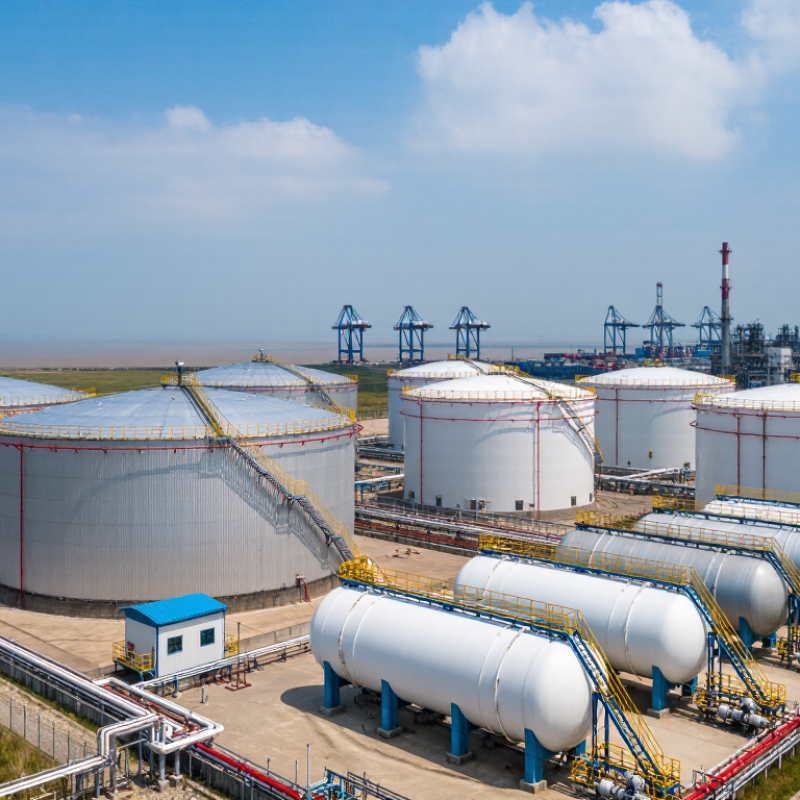
Oil Tank Taxonomy: Fixed-Roof, Floating-Roof, and Pressure-Rated Systems
Choosing an oil tank in 2026 starts with product behavior, not appearance. Fixed-roof tanks suit stable, lower-volatility liquids where vapor control is manageable. They are usually economical, simple to inspect, and practical for bulk storage. However, a warm afternoon can increase vapor pressure inside the tank. That detail matters. Buyers should verify vent sizing, internal lining, foundation settlement limits, and access for cleaning. Field checks often reveal overlooked drain points or poorly protected nozzles.
Floating-roof tanks reduce vapor space by allowing the roof to follow the liquid level. External roofs work well for large atmospheric tanks and frequent inventory movement. Internal roofs add vapor protection beneath a fixed outer shell. Both designs need careful seal inspection. Small gaps can increase emissions and admit rainwater. Wind, snow, corrosion, roof drainage, and rim-seal wear require documented maintenance. Do not select by capacity alone. Review turnover rate, climate, loading speed, and emergency access with a qualified engineer. One imperfect assumption can distort the whole cost model.
Pressure-rated systems serve fluids that cannot be safely stored at atmospheric pressure. They use reinforced shells, certified relief devices, and tighter operating controls. Design review should confirm maximum allowable working pressure, temperature range, vacuum resistance, and fatigue exposure. Instrumentation should show pressure and temperature clearly from the operating area. Remote alarms are useful, but they never replace physical inspection. For global buyers, standards, fabrication records, welding qualifications, and inspection certificates deserve equal attention. Requirements vary by destination. I would also question optimistic delivery dates; coating cure time and testing can change them.
2026 Top Oil Tank Types for Global Buyers? – Oil Tank Taxonomy: Fixed-Roof, Floating-Roof, and Pressure-Rated Systems
| Tank Type | Roof Configuration | Typical Internal Pressure | Typical Oil Applications | Common Capacity Range | Vapor and Emission Control | Key Benefits | Main Limitations | Common Design References |
|---|---|---|---|---|---|---|---|---|
| Fixed-Roof Tank | Cone roof, dome roof, or umbrella roof permanently attached to the shell | Near atmospheric pressure; API 650 atmospheric tanks are generally limited to low internal pressure, commonly up to approximately 2.5 kPa above atmospheric pressure when designed accordingly | Fuel oil, diesel, lubricating oil, crude oil, asphalt, chemicals, and other relatively low-volatility liquids | Approximately 50 m³ to more than 100,000 m³, depending on site layout, shell design, and project requirements | Natural breathing through pressure-vacuum vents; vapor recovery, internal coating, nitrogen blanketing, or conservation vents may be added | Lowest structural complexity, economical fabrication, flexible sizing, and suitability for many non-volatile oils | Higher vapor losses than floating-roof designs for volatile products; roof and shell must be protected from vacuum and overpressure conditions | API 650, EN 14015, API 2000, and applicable local fire, environmental, and seismic requirements |
| External Floating-Roof Tank | Floating deck exposed to the atmosphere, usually with a shell-mounted wind girder and peripheral seal | Essentially atmospheric; the floating roof moves with the liquid level and is not normally used as a pressure vessel | Crude oil, gasoline blend components, naphtha, condensate, and other volatile petroleum liquids where emission reduction is important | Approximately 5,000 m³ to more than 150,000 m³ in large terminals and refineries | Reduces vapor space and evaporative losses; primary and secondary seals are commonly used, with optional vapor recovery systems | Lower working and breathing losses, effective for large-diameter storage, and suitable for many volatile hydrocarbons | Higher roof, seal, drainage, inspection, and wind-load requirements; exposed equipment can be affected by rain, snow, ice, and corrosion | API 650, API 2000, API 653 for inspection, NFPA 30 where applicable, and relevant environmental regulations |
| Internal Floating-Roof Tank | Floating deck installed inside a fixed-roof tank; the deck may be aluminum or welded steel depending on service | Near atmospheric pressure, with the fixed roof protecting the floating deck from weather exposure | Gasoline, solvents, light petroleum products, and other volatile liquids requiring reduced emissions and weather protection | Approximately 1,000 m³ to 100,000 m³, subject to product, diameter, and regulatory requirements | Floating deck and rim seals substantially reduce vapor space; fixed-roof vents and vapor-control equipment manage tank breathing | Combines emission reduction with protection from precipitation, solar heating, and some external contamination | More components and maintenance than a standard fixed-roof tank; requires careful attention to deck buoyancy, seals, vents, and roof clearances | API 650, API 2000, API 653, NFPA 30 where applicable, and local air-emission requirements |
| Low-Pressure Storage Tank | Fixed cone or dome roof with reinforced shell and roof components designed for controlled positive pressure and vacuum | Above atmospheric but below conventional pressure-vessel levels; API 620 designs may be used for large welded tanks up to approximately 103 kPa internal pressure when specified and engineered accordingly | Volatile hydrocarbons, refrigerated or heated oil-related products, and storage where vapor management requires more pressure tolerance than API 650 atmospheric tanks | Approximately 500 m³ to more than 100,000 m³, depending on pressure, temperature, and construction method | Controlled pressure operation can reduce routine venting; pressure-vacuum relief valves, emergency vents, and vapor recovery may be required | Greater pressure capability than atmospheric tanks while retaining large-volume storage economics | Higher engineering, fabrication, testing, and relief-system requirements; not a substitute for a certified pressure vessel when pressure or temperature exceeds the applicable tank code | API 620, API 2000, API 653, and applicable pressure, fire, seismic, and environmental regulations |
| Pressure-Rated Storage Vessel | Fully enclosed cylindrical, spherical, or horizontal vessel with welded or formed pressure-retaining components | Designed for a specified maximum allowable working pressure; the value is project-specific and may range from several bar to much higher pressures | Pressurized LPG and liquid hydrocarbons, light ends, vapor-rich products, and specialized oil-process services | Commonly smaller than atmospheric tanks; approximately 1 m³ to 5,000 m³, with capacity strongly dependent on pressure and product properties | Closed system with relief valves, isolation valves, instrumentation, and process-control equipment; vapor losses can be minimized when correctly operated | Handles pressurized products and higher vapor pressures; provides controlled containment and reduced atmospheric exposure | Highest capital cost per unit of capacity, stricter inspection and testing, more complex operation, and greater consequence of overpressure or leakage | ASME Boiler and Pressure Vessel Code Section VIII, applicable national pressure-equipment regulations, API 2510 where applicable, and local fire codes |