Choosing Plastic Packaging Materials is a practical decision with consequences across shipping, shelf life, cost, and recovery. Global buyers compare polyethylene, polypropylene, PET, PVC, polystyrene, and newer alternatives, but no material wins everywhere. A clear bottle may suit a beverage; a flexible film may save shipping space. The right choice depends on the product, supply chain, and available collection systems.
The scale is substantial. UNEP’s 2023 report, Turning off the Tap, estimates that packaging accounts for 36% of plastics produced worldwide. The OECD’s Global Plastics Outlook reports that global plastic production reached 460 million tonnes in 2019. These figures make material selection more than a purchasing detail. They also require careful reading: global totals do not tell buyers what works in a specific market. Small differences matter.
Circular-economy pioneer Ellen MacArthur’s work describes the goal as “restorative and regenerative by design.” That principle encourages buyers to examine recyclability, recycled content, barrier performance, and local recovery—not just unit price. A thin pouch can reduce transport weight, yet may be difficult to sort where flexible-film collection is limited. A rigid format may travel well, but use more material. There is no effortless answer. This guide compares ten widely used packaging materials through practical criteria, including protection, processing, cost, and end-of-life options. Treat the comparison as a starting point, then verify supplier specifications and local infrastructure before committing.
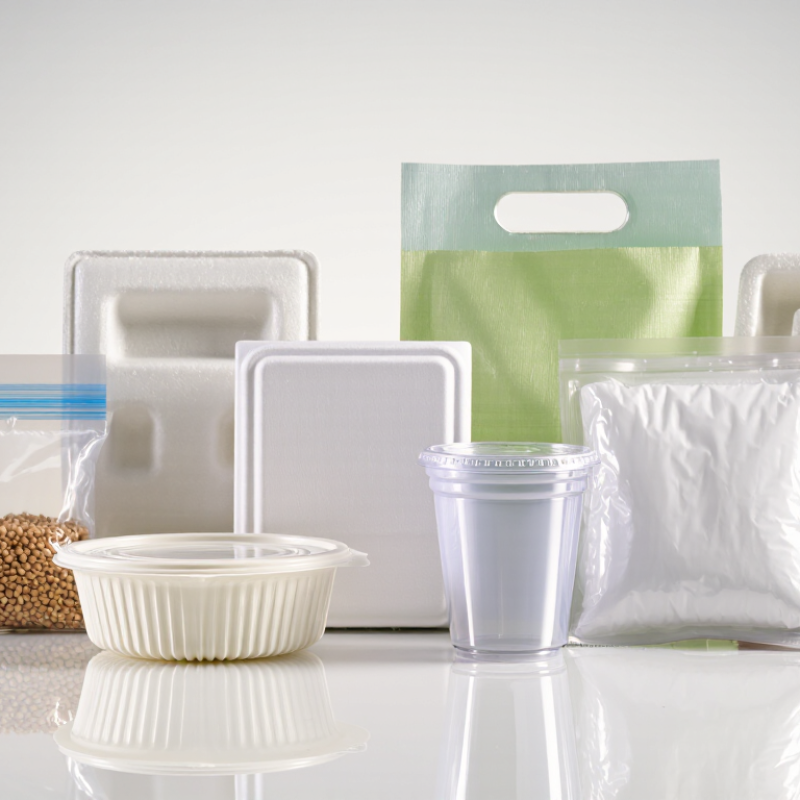
Plastic packaging materials are commonly classified by resin, structure, and function. PET is often used for clear bottles and trays because it is lightweight and offers useful gas barriers. HDPE suits sturdier containers, such as detergent bottles, while LDPE and LLDPE are common in flexible films and pouches. PP handles heat better than many common packaging plastics, so it can suit food tubs and caps. These are typical uses, not fixed rules.
Structure matters too. Rigid packaging protects products from crushing; flexible films reduce weight and can wrap irregular shapes. Multilayer materials combine properties, such as moisture resistance and strength, but may be harder to sort or recycle. A material that performs well in a sample test may behave differently on a high-speed filling line. Check seal strength, product compatibility, transport conditions, and available recycling systems before choosing. Small details matter.
Tips: Request a technical data sheet and test samples with the actual product. Compare barrier performance and package weight, but do not rely on appearance alone. Clear film can look suitable and still provide too little protection. Begin with real shipping and storage conditions; I have seen teams overlook them.
Compare each plastic against the product, filling line, and shipping route—not a generic “best material” ranking. Check oxygen and moisture transmission, puncture resistance, seal strength, clarity, and performance at the actual storage temperature. ASTM D3985 and ASTM F1249 provide common methods for measuring oxygen and water-vapor transmission through films. Numbers need context. A thin film may look efficient in a lab but fail at a sharp corner or during a hot, humid transit.
The scale of packaging makes these choices consequential. OECD’s Global Plastics Outlook (2022) estimates that packaging generated about 40% of global plastic waste in 2019. PlasticsEurope’s Plastics – the Fast Facts 2023 reports that packaging represented 39.1% of European plastics conversion in 2022. For buyers, compare resin weight per pack alongside protection, spoilage risk, and local collection and sorting access. A recyclable label alone does not show whether a package will be collected or successfully sorted where it is sold.
Request test data for the finished structure, not just a resin’s technical sheet. Check seal performance on the intended equipment, then trial samples after realistic transport and storage. Also compare cost per thousand usable packs, since a lighter film can require tighter process control. One limitation: supplier figures may come from different test conditions, so direct comparisons can mislead. Record the temperature, humidity, and test method; then verify the result on your own line.
Comparison guide: High, Medium, and Low are relative, general-purpose assessments. Actual performance depends on grade, thickness, additives, package design, and processing. “Barrier” refers to resistance to oxygen or water vapor transmission; lower transmission generally provides better protection.
| Material | Typical Packaging Forms | Oxygen Barrier | Moisture Barrier | Heat Resistance | Flexibility / Impact | Clarity | Common Recycling Identification | Key Strength | Main Consideration |
|---|---|---|---|---|---|---|---|---|---|
| PET (polyethylene terephthalate) | Beverage bottles, food jars, trays, films | Medium | High | Medium | Medium | High | #1; bottle recycling is widely established in many markets | Clear, lightweight packaging with good strength and moisture protection | Oxygen-sensitive products may need a barrier layer, coating, or specialized grade. |
| HDPE (high-density polyethylene) | Milk and detergent bottles, jugs, caps, rigid containers | Low | High | Medium | High | Low to medium | #2; commonly collected where local programs accept it | Tough, moisture-resistant, and suitable for many household and personal-care products | Usually opaque or translucent; limited oxygen barrier can restrict some food uses. |
| LDPE (low-density polyethylene) | Bags, liners, squeeze bottles, flexible films | Low | High | Low to medium | High | Medium to high | #4; flexible-film collection varies by location | Soft, flexible, and effective at keeping out moisture | Provides limited oxygen protection; thin films can be difficult to sort in some systems. |
| LLDPE (linear low-density polyethylene) | Stretch wrap, pallet film, liners, flexible packaging | Low | High | Low to medium | High | Medium | Often #4; film recovery depends on local collection and sorting | Strong puncture and tear resistance in flexible films | Not a high-oxygen-barrier material; collection options for film differ widely. |
| PP (polypropylene) | Food tubs, cups, caps, woven sacks, microwaveable containers | Medium | High | High | Medium to high | Medium to high | #5; acceptance varies by local recycling infrastructure | Good moisture barrier and better heat tolerance than many commodity packaging plastics | Recycling access is less consistent than for common PET and HDPE packaging in some regions. |
| PVC (polyvinyl chloride) | Blister packs, shrink sleeves, some bottles and flexible films | Medium | High | Medium | Varies by formulation | High in clear grades | #3; packaging recycling is limited in many areas | Can be made rigid or flexible and can provide useful barrier properties | Separate collection and recycling are limited; confirm regulatory and end-of-life requirements. |
| PS (polystyrene) | Rigid food cups, trays, lids, and protective packaging | Low | Medium | Low to medium | Low to medium; rigid grades can be brittle | High in clear grades | #6; acceptance depends on local facilities and format | Lightweight, readily formed, and available in clear or opaque grades | Limited toughness and variable recycling access; check rules for food-contact use. |
| EPS (expanded polystyrene) | Cushioning blocks, protective inserts, insulated boxes | Low | Medium | Low to medium | Good cushioning; can crush under repeated loading | Opaque | #6; collection and recycling are limited in many regions | Very lightweight cushioning and thermal insulation | Bulky relative to its weight and often difficult to collect economically. |
| PA (polyamide, nylon) | High-barrier films, vacuum pouches, and multilayer food packaging | High when dry | Low to medium | Medium to high, depending on grade | High puncture resistance and toughness | Medium | Often identified as #7 or “Other”; recycling routes are limited | Strong, puncture-resistant film with useful oxygen barrier when dry | Absorbs moisture, which can reduce its oxygen-barrier performance; commonly used in laminates. |
| EVOH (ethylene vinyl alcohol) | Barrier layers in co-extruded bottles, films, and food trays | Very high when dry | Low | Grade- and structure-dependent | Usually used as a thin barrier layer | Usually clear within a multilayer structure | No widely used dedicated household resin code; typically part of a multilayer pack | Excellent oxygen barrier in protected multilayer structures | Moisture can impair barrier performance; multilayer construction can complicate recycling. |
Buyer note: Recycling codes identify resin categories, not a guarantee that packaging will be accepted or recycled. Verify local collection rules, food-contact regulations, required shelf life, filling conditions, transport needs, and the exact grade or multilayer structure before specifying a material.
Global packaging buyers compare ten leading plastic materials by product, route, and recovery options. OECD’s Global Plastics Outlook estimates that the world generated 353 million tonnes of plastic waste in 2019; only 9% was ultimately recycled. That figure makes end-of-life planning a purchasing issue, not a footnote.
PET suits clear beverage bottles and trays; HDPE works well for milk jugs and household containers. LDPE and LLDPE provide flexible films, while PP handles tubs, caps, and hot-fill applications. PVC remains common in selected blister packs. PS is used in rigid cups and trays, and EPS cushions fragile goods in transit. PA adds puncture resistance to demanding films. EVOH helps limit oxygen transfer in multilayer packs. Different jobs, different trade-offs.
A buyer should check seal strength, moisture and oxygen barriers, temperature range, and shipping conditions using actual samples. Ask suppliers for technical data sheets and test packaging on the intended filling line. Material labels alone can mislead: multilayer structures may be difficult to recycle where collection systems lack suitable sorting and processing. That shortlist is imperfect. Local infrastructure and verified recycled-content claims can change the better choice. OECD, Global Plastics Outlook: Economic Drivers, Environmental Impacts and Policy Options, 2022.
Choosing plastic packaging starts with the product, not the resin list. PET suits clear bottles and trays when visibility and good stiffness matter. HDPE works well for opaque bottles that need toughness and moisture resistance. For flexible pouches or liners, LDPE can provide useful softness and sealability. PP is often chosen for tubs, caps, and parts exposed to warmer filling conditions, but confirm the exact grade’s temperature limits.
Packaging format changes the decision. A thin film may reduce shipping weight, yet puncture easily around sharp-edged goods. A rigid container protects its shape but takes more space in transit. Match barrier needs to the product: aroma-sensitive contents may need stronger oxygen protection, while light-sensitive products may need opaque or tinted packaging. A clear pack can look appealing, but appearance alone is a poor performance test. There is no perfect resin. Small design trade-offs are easy to miss.
Tips: Ask suppliers for material specifications and test samples with the actual product, closure, and filling process. Check seal strength, drop performance, and storage conditions. Compare realistic use cases. A lab result may not reflect every shipping route. Revisit the choice if returns or damage reveal a weak spot.
Typical material density by packaging material (g/cm³)
Density is one useful comparison point, not a stand-alone measure of packaging performance. PET is commonly used for bottles and trays; HDPE for bottles and containers; LDPE and LLDPE for flexible films and pouches; PP and BOPP for tubs, films, and wrappers; PVC for selected blister packs; PS for cups and trays; PA for tough barrier films; and EVOH as a barrier layer in multilayer packaging. Actual properties vary by grade and construction.
For global buyers, choosing among PET, HDPE, LDPE, PP, PS, PVC, EPS, PLA, recycled-content resins, and multilayer films is only the start. A material that runs smoothly on one filling line may wrinkle, crack, or seal poorly on another. Request samples, test them with the actual product, and confirm barrier needs, transport temperatures, and shelf-life targets before approving volume orders. Small trials catch surprises.
Packaging rules and recycling claims vary by destination, product type, and intended use. Ask suppliers for current technical data, declarations, test reports, and traceability records; then check them against each market’s requirements with qualified local reviewers. Do not treat a generic “food-safe” statement as proof for every application. Recycled content can reduce demand for virgin resin, yet availability, color consistency, odor, and performance may differ by batch. A lower unit price can also hide freight, damage, or sorting costs. Paperwork matters.
Tip: Put the target market, resin grade, recycled-content percentage, and acceptance tests in the purchase specification. Keep a retained sample from each approved batch. Compare actual scrap rates and package weight, not just supplier estimates. One awkward truth: the lightest pack is not always the lowest-impact choice if it causes more product loss.