In today's competitive market, businesses seek innovative packaging solutions. The stand up box pouch has gained significant attention for its unique benefits. Industry expert Sarah Thompson, a packaging consultant, states, "The stand up box pouch is a game-changer for brands looking to enhance their visibility."
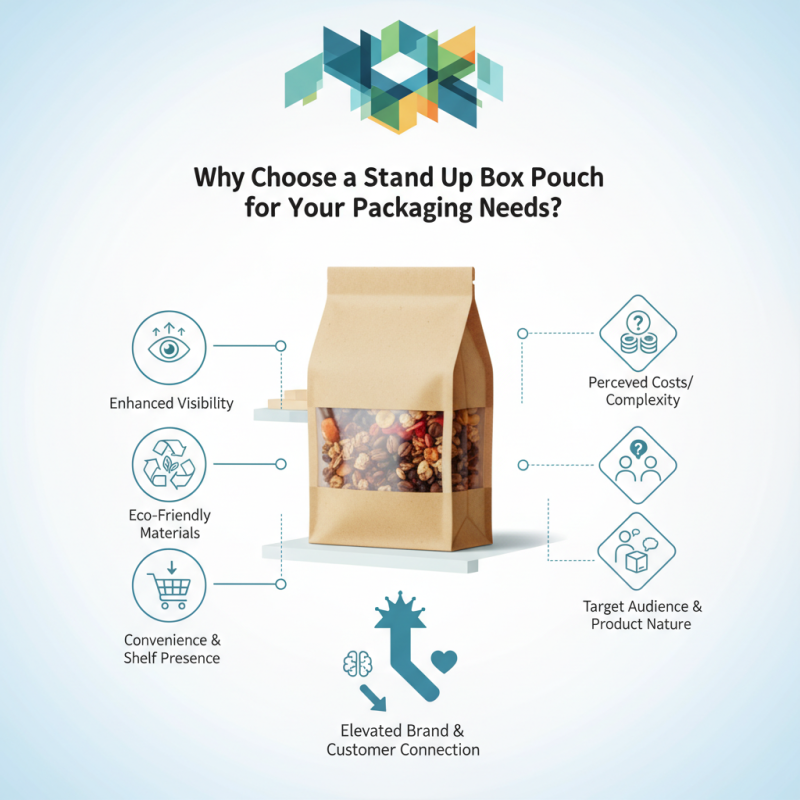
This packaging style offers both functionality and aesthetics. It stands upright on shelves, showcasing the product inside. The materials used are often eco-friendly, appealing to environmentally conscious consumers. However, not every brand has embraced this option. Some still hesitate due to perceived costs or complexity.
Choosing the right packaging is critical. The stand up box pouch provides convenience while standing out in crowded aisles. Brands must consider their target audience and product nature. Reflecting on these challenges can lead to better decisions. The right choice can elevate a brand and foster deeper connections with customers.
Stand up box pouches have gained popularity for various packaging needs. They offer distinct advantages over traditional packaging options. Their design allows products to stand upright, enhancing visibility on shelves. This feature can attract attention and encourage impulse purchases.
One significant benefit of using stand up box pouches is their versatility. They are suitable for different types of products, from snacks to liquids. The pouches can be resealed, which helps maintain freshness and reduces waste. This is crucial for both consumers and manufacturers.
Another aspect worth considering is the eco-friendliness of these pouches. Many are made from recyclable materials. However, not all manufacturers use sustainable practices, which raises a concern. It's important to choose pouches that prioritize eco-conscious designs. This ensures that businesses can meet customer expectations for sustainability. The packaging should reflect a commitment to the environment while remaining functional and appealing.
Stand up box pouches offer innovative solutions for packaging. They differ significantly from traditional options like boxes or jars. Traditional packaging often occupies more space, leading to higher shipping costs. In contrast, stand-up pouches take up less room. They are lightweight and easy to transport.
Additionally, the opening mechanism of these pouches is user-friendly. Customers appreciate how easy it is to pour or access the contents. Traditional packaging sometimes requires tools for opening, which can frustrate users. Furthermore, stand-up pouches often feature resealable closures. This guarantees product freshness. Many brands strive for sustainability. Yet, traditional packaging can be less eco-friendly due to recycling challenges.
The design flexibility of stand-up pouches is also notable. They can be customized easily for various products. Traditional packaging may not offer this level of adaptability. However, brands should consider production costs. Quality control might be challenging in some pouches. Reflections on these factors can guide the decision-making process for brands.
Stand-up box pouches offer remarkable versatility for various packaging needs. These durable pouches protect products while providing eye-catching designs. They can hold liquids, solids, or granular materials. The flat bottom allows for stability on shelves. Custom shapes and sizes create unique branding opportunities. This adaptability appeals to many industries, from food to cosmetics.
Customization enhances the appeal of stand-up box pouches. They can feature vibrant colors, intricate patterns, or clear windows for product visibility. This allows brands to tell their story more effectively. However, some designers struggle with balancing creativity and functionality. Sometimes, a striking design may compromise usability. It’s essential to reflect on this balance.
Different closure options are available, like zippers or spouts. Each offers varying levels of convenience and reusability. Brands often overlook the importance of these little details. They can greatly affect user experience. Packaging must serve the product well while attracting customers. Failing to do so can lead to missed opportunities in a competitive market.
In recent years, the demand for sustainable packaging solutions has grown significantly. Box pouches are emerging as an environmentally friendly alternative. According to a report from the Flexible Packaging Association, flexible packaging, including box pouches, has a lower carbon footprint than traditional rigid packaging. This is due to the reduced materials required for production and transportation.
Box pouches are often made from recyclable materials. Many manufacturers are now choosing to use renewable resources, further decreasing their environmental impact. Data from the Paper and Packaging Board highlights that companies using sustainable packaging can appeal to over 70% of eco-conscious consumers, driving sales and customer loyalty. Yet, the recycling infrastructure varies widely by region, which poses challenges.
Despite their advantages, challenges remain. Not all box pouches are recyclable, and some may still end up in landfills. Companies must invest in innovations to enhance recyclability. Research shows that packaging waste contributes to 30% of landfill mass. As the industry moves forward, addressing these flaws is crucial. The focus should remain on creating pouches that are both effective and sustainable, ensuring the packaging industry adapts to evolving consumer demands.
This chart illustrates the CO2 emissions associated with different packaging options. Box pouches stand out as a more sustainable choice, contributing significantly lower emissions compared to traditional plastic and glass containers. The emphasis on reducing carbon footprints aligns with the growing demand for environmentally friendly packaging solutions.
Stand-up box pouches are becoming popular for various reasons. One major advantage is their cost-effectiveness. They require less material compared to traditional boxes. This can significantly reduce production costs. Additionally, because they take up less space, you can save money on shipping. The compact design means more products fit in a shipment. Less space also translates to lower transportation costs.
Efficiency is another key factor. Stand-up pouches are easy to store and stack. Their design allows for optimal use of shelf space. Retailers appreciate this efficiency. It means products stand out on the shelves. Easy access is a bonus for consumers too. They can open and reseal the pouch without much fuss. However, some may find that the resealing mechanism doesn’t always work perfectly. User experience may vary depending on the product.
In today's market, sustainability is also important. Many stand-up pouches are made from recyclable materials. This approach can reduce environmental impact. Yet, the production processes for these materials are still under scrutiny. Questions remain about their true sustainability. There’s room for improvement. Companies should continually assess the impact of their packaging choices. Embracing innovative solutions is crucial for future growth.