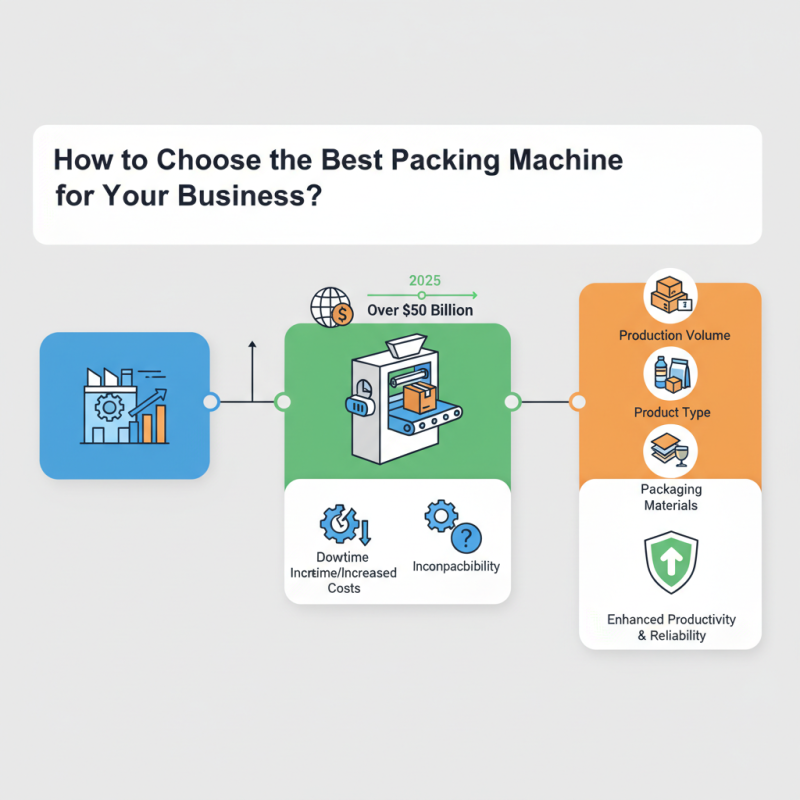
In the competitive world of packaging, choosing the right Packing machine can significantly impact operational efficiency. According to a 2022 report by Smithers Pira, the global packaging machinery market is projected to reach over $50 billion by 2025. This highlights a growing demand for advanced packing solutions across various sectors. Yet, many businesses struggle with selecting a machine that meets their unique needs.
Packing machines come in various forms, tailored for different products and industries. The wrong choice can lead to production downtime and increased costs. Studies show that companies frequently underestimate the importance of compatibility with existing processes. Furthermore, a lack of research can result in purchasing machines that do not meet specific packaging requirements.
Investing in the right packing machine is not just about following trends. It’s imperative to assess the specific needs of your business. Companies should analyze production volume, product type, and packaging materials carefully. Failure to consider these elements can lead to inefficient operations. Making informed decisions will ensure that your packing machine enhances productivity and reliability.
Choosing the right packing machine is crucial for your business’s efficiency. To make an informed choice, understanding your specific packing needs is vital. Consider the types of products you pack. Are they fragile, bulky, or perishable? Each category has different requirements. A fragile item needs a machine that offers protective packing. On the other hand, bulkier items may call for robust and speedy packing solutions.
Next, think about the volume of products you'll be handling. A high-volume business demands a fast and reliable packing machine. Conversely, if your output is lower, a simpler model may suffice. Evaluate your workspace too. The machine should fit comfortably within your production area without impeding workflow. Reflection on past packing experiences can provide insights. Were there bottlenecks or inefficiencies? Learning from these can guide you toward a suitable solution. Balancing your budget with your packing needs is essential but can be challenging. Finding a machine that meets all your criteria often requires compromise.
Choosing a packing machine involves understanding the various types available. Automatic packing machines stand out for their speed and efficiency. Industries report that they can process products at rates exceeding 150 packs per minute. This high output can significantly boost production capacity. However, initial investments are higher compared to manual machines.
Semi-automatic machines are versatile. They require some manual intervention yet can still speed up packing processes. Nearly 30% of small business owners opt for this type due to lower costs. These machines are especially useful for products that vary in size and shape. Reports show user satisfaction levels are high in this segment as companies appreciate the balance between efficiency and budget.
Modified Atmosphere Packaging (MAP) machines are gaining traction in food industries. They extend product shelf life by altering the gases surrounding food items. According to industry research, the global MAP market is expected to grow annually by 5.6% over the next five years. This trend reflects increasing demand for fresher food options. Despite this, some users report challenges in adjusting machine settings for different products, indicating the need for further training or adaptation.
When selecting a packing machine for your business, several key features should be prioritized. Efficiency is crucial; consider the machine's output capacity. According to a report by Research and Markets, automating your packing process can increase throughput by up to 30%. This not only optimizes productivity but also reduces labor costs significantly.
Durability plays a major role as well. Machines that can withstand high daily usage typically have a longer life span. Look for machines constructed with high-quality materials that endure wear and tear. Regular maintenance is essential to ensure optimal performance. Preventative checks can save you from costly repairs or delays.
One important aspect to reflect on is the machine's versatility. A packing machine that adapts to various product shapes and sizes may save you the hassle of investing in multiple units. Additionally, consider the technology involved. Some machines offer advanced features like programmable settings, which simplify operations. When choosing, confirming compatibility with your existing workflow will help reduce mistakes.
Tips: Always review the performance metrics of machines before purchasing. Compare specifications and real-world efficiency data. Seek feedback from industry peers to gauge reliability. A thorough evaluation can guide you to a well-informed choice.
Choosing the best packing machine for your business requires careful financial consideration. According to a recent industry report, around 30% of small businesses encounter cash flow issues when investing in equipment. Thorough budget assessment can help avoid such pitfalls.
Understanding your return on investment (ROI) is key. The right packing machine can increase efficiency by up to 25%, leading to significant savings in labor costs. However, if you rush into choosing a machine without proper analysis, you might end up with equipment that doesn't fit your needs.
Be mindful of projected output versus actual demand.
Tips: Analyze operational costs before making a purchase. Compare potential savings against the initial investment. Calculate how many units you need to produce to break even. A detailed ROI analysis can help illuminate whether a more advanced machine, with a higher upfront cost, will ultimately benefit your bottom line.
When choosing a packing machine, evaluating supplier reputation is crucial. According to industry data, around 30% of businesses face issues due to unreliable suppliers. A strong reputation indicates reliability and quality. Look for suppliers with years of experience in the field. Check for certifications or industry awards. This can serve as indicators of excellence.
Customer support is another vital aspect. A survey by Packaging World revealed that 82% of users prefer suppliers who provide extensive technical assistance. Effective support not only helps with initial setup but also ensures long-term operational efficiency. Assess supplier support services by reviewing customer feedback and testimonials online.
Tips: Always ask potential suppliers about their service response times. It's important to have quick support during a machine failure. Additionally, request case studies to gauge their problem-solving abilities. Remember, a capable supplier can enhance your operational efficiency significantly.