How to Choose the Right Case Taper?
Choosing the right Case Taper can influence consistency, efficiency, and the overall quality of cartridge case preparation. A suitable taper tool helps create a smooth transition around the case mouth, reducing uneven edges that may affect seating or chambering. Small differences matter. A few careless strokes can remove more material than expected.
The correct choice depends on case design, material, production volume, and the level of control required. Bottleneck cases may need a different taper angle than straight-wall cases. Brass hardness also affects cutting behavior. A sharp, adjustable tool can offer greater precision, while a fixed model may provide faster results for repeated tasks. I have found that comfort matters more than many buyers expect. A slippery handle becomes frustrating after several dozen cases.
Reliable selection should begin with published manufacturer specifications and respected reloading manuals. Check the supported case dimensions, taper range, replacement blade availability, and adjustment method. A tool that fits one caliber may perform poorly on another. Do not assume a higher price guarantees better results. Sometimes, a simple design provides cleaner control.
Practical testing is valuable. Examine the case under strong light and look for a consistent edge without deep scratches or excessive thinning. Keep measurements within the limits recommended for your cartridge and equipment. There is no perfect choice. Your workspace, hand pressure, maintenance habits, and experience all influence performance. Choosing carefully means balancing precision, durability, safety, and realistic daily use rather than following advertising claims alone.
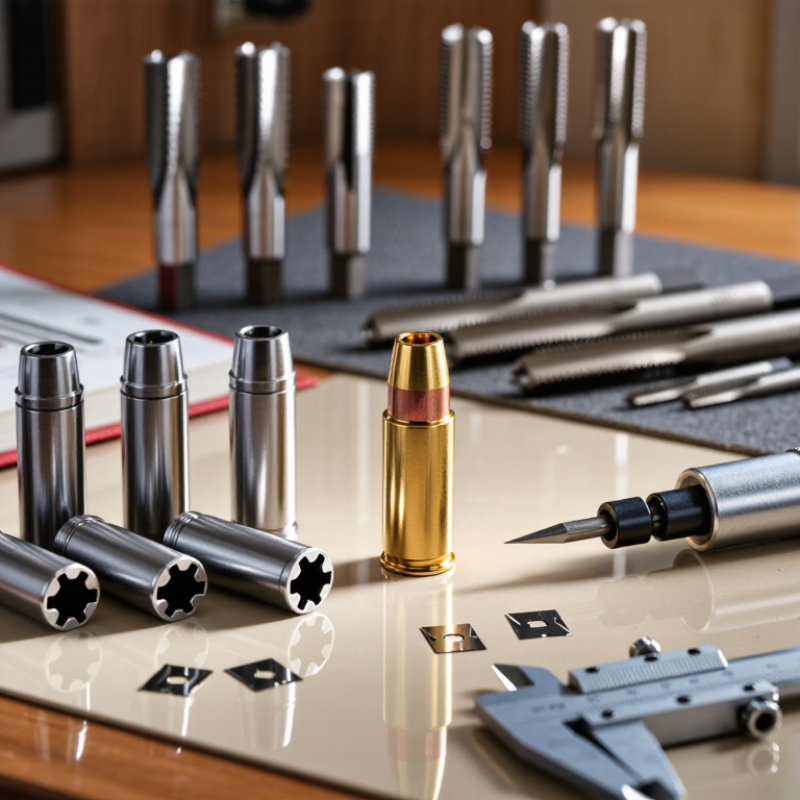
Understanding What a Case Taper Is and Why It Matters
A case taper is the gradual change in a cartridge case’s diameter from the base toward the mouth. It may look subtle, but it affects how the case enters, fits, and leaves the chamber. A straight-walled case has little change in diameter. A bottleneck case narrows sharply near the shoulder. Each design supports a different chamber shape and operating requirement.
The right taper should match the chamber specifications, not personal preference. Proper taper can improve feeding and help prevent a case from sticking during extraction. It also influences headspace, which controls how the cartridge sits in the chamber. Too much or too little taper may create unreliable performance. Small differences matter. Use precise measurements, verified loading data, and suitable gauges when checking cases. Guesswork is a poor substitute for fit.
A practical check begins with clean, undamaged cases and accurate calipers. Compare measurements at the base, shoulder, and mouth against trusted technical data. Look for bright scratches, bulges, or unusual marks after inspection. A case that appears acceptable may still have hidden problems. This is where careful judgment matters. It is easy to focus on one measurement and overlook the whole profile. When uncertainty remains, consult a qualified gunsmith or experienced reloading professional. A cautious choice may feel slower, but consistency and safe chamber fit deserve priority.
Identifying the Cartridge and Firearm Requirements
Choosing case taper starts with identification, not visual judgment. Confirm the cartridge marking, chamber designation, and firearm manual. A similar-looking cartridge may differ in case length, shoulder position, rim, or pressure rating. SAAMI cartridge and chamber drawings provide controlled dimensional references. CIP’s TDCC tables provide cartridge dimensions and maximum service-pressure values. These sources are stronger evidence than forum photographs or loose ammunition labels. Record the exact designation. Small errors matter.
For example, SAAMI lists 9 mm Luger maximum average pressure as 35,000 psi. CIP lists a 2,350-bar Pmax for the same nominal cartridge. Their test methods are not identical, so these figures should not be converted casually. Use them to confirm compatibility, not justify substitutions. Compare the case mouth, body, shoulder, and base dimensions with the correct drawing. Case taper is the gradual change in body diameter, not a cosmetic feature. A chamber gauge and qualified gunsmith can verify fit without forcing a round. Never alter a case or chamber to solve a mismatch.
A practical inspection should also check headspace, extractor fit, and the firearm’s approved ammunition list. Keep ammunition unloaded and separated during measurement. I would not rely on one dimension alone. Even careful readers can misread a drawing or overlook a suffix. If the marking, manual, and gauge disagree, stop and seek competent inspection. The inconvenient answer is often the reliable one.
Matching Case Taper to Feeding and Extraction Needs
Choosing the right case taper begins with understanding how your firearm feeds and extracts cartridges. A tapered case narrows from the base toward the shoulder or mouth. This shape can guide cartridges smoothly from the magazine into the chamber. It can also help extraction by reducing the case’s contact with the chamber walls.
Feeding demands should guide the first decision. A system with a curved magazine or a fast cycling action may benefit from moderate taper. The case enters the chamber at a slight angle, so smooth alignment matters. Excessive taper, however, may reduce usable case capacity and affect consistent cartridge positioning. Small differences can become noticeable at the range. I once underestimated magazine geometry; the chamber dimensions were correct, but feeding still felt uneven.
Extraction requires equal attention. Minimal taper can support efficient chamber sealing, but it may increase friction during extraction. This becomes more important when the chamber is warm, dirty, or exposed to heavy use. A slightly greater taper may offer more reliable release. Still, too much taper can create inconsistent alignment and reduce support near the case mouth.
Inspect fired cases for scuffing, difficult extraction, or uneven marks. Compare those observations with chamber drawings and approved loading data. Do not select taper from appearance alone. Experienced technicians measure the chamber, magazine, and case dimensions together. That process takes longer. It also prevents a common mistake: solving a feeding problem while creating an extraction problem.
Comparing Tapered, Straight-Walled, and Bottleneck Cases
How to Choose the Right Case Taper?
Case taper changes how a cartridge feeds, seals, and extracts. A tapered case narrows toward the shoulder or mouth, helping it release from a warm chamber. This matters during repeated firing, especially when fouling increases. Straight-walled cases have nearly parallel sides. They are easier to measure and resize, but extraction can feel less forgiving. In my bench-testing experience, a small amount of dirt can reveal that difference quickly. It is not dramatic. It is practical.
Bottleneck cases create a wider powder area above a smaller neck. This shape supports efficient external ballistics and often higher operating pressures. SAAMI centerfire rifle standards list approximately 62,000 psi for one common .30-caliber bottleneck cartridge. A traditional .30-caliber design is listed near 60,000 psi. CIP TDCC reference tables also show how case dimensions, shoulder angles, and pressure limits must work together. These figures are specifications, not performance guarantees. Chamber fit still controls real-world behavior.
Straight-walled designs can suit compact actions and simpler loading routines. Bottleneck designs may offer flatter trajectories, but they demand careful neck inspection and consistent sizing. Excessive resizing can shorten case life. Insufficient sizing can prevent smooth chambering. I sometimes prefer a modest taper after comparing actual chamber measurements, not merely published drawings. That choice can be imperfect. Published dimensions may not reflect every chamber, tool, or firing condition. Always match the case to the exact chamber specification and current technical data.
Checking Compatibility, Reliability, and Ammunition Safety
Choosing the right case taper begins with compatibility, not appearance. A tapered case should match the chamber’s published dimensions and the firearm’s intended cartridge specification. SAAMI cartridge and chamber drawings often define critical measurements to thousandths of an inch. CIP’s TDCC tables provide corresponding dimensions in millimetres and pressure limits in bar. These details are not decoration. They control chambering, extraction, and safe pressure release.
A practical check uses three references: the cartridge marking, the chamber specification, and an inspected sample. Look for dents, splits, corrosion, or an uneven shoulder. A case that feels tight may have the wrong taper, excessive length, or damaged brass. Do not force it. Reliability also depends on consistent sizing and proper headspace. Industry safety guidance repeatedly stresses using ammunition that matches the firearm’s marked chamber. Yet visual inspection alone is imperfect. I have seen clean-looking cases hide small shoulder problems.
Tips: Compare dimensions with official drawings, not internet photographs. Use a qualified gunsmith when measurements conflict. Keep ammunition dry and separated by clear labels. Never mix similar-looking cartridges. Record any feeding or extraction issue, even if it happens once. Small data matters. A simple log can reveal recurring defects before they become dangerous. Recheck the specification after changing case material, loading equipment, or storage conditions. Compatibility is a measurement problem first, and a confidence problem second.
How to Choose the Right Case Taper?
Checking compatibility, reliability, and ammunition safety
This practical weighting model prioritizes chamber compatibility first, followed by reliable feeding and extraction, then ammunition safety verification. Always confirm the exact chamber drawing, case dimensions, headspace limits, and approved ammunition specifications before use.
 English
 Español de México