 English
 Español de México


How to Choose the Right Foil Pouch for Your Product?
Choosing a Foil Pouch is not just a packaging decision; it affects freshness, handling, and the customer’s first impression. The right option depends on what the product needs, not simply how shiny the package looks. A fine coffee powder, for example, may need strong protection from moisture and oxygen, while a dry snack may also need a pouch that resists punctures during shipping. Small details matter. Product weight, filling temperature, storage conditions, and expected shelf life all help narrow the choices.
This guide explains how to compare pouch structures, sizes, closures, and finishes in practical terms. It also covers useful questions to ask suppliers, such as whether the material suits your filling equipment and whether barrier claims are supported by product data. Ask for samples. Test them. A zipper can feel convenient, but it does not replace a reliable heat seal or suitable storage. Check printed details carefully, too; a clear label helps customers understand the product and its use. Requirements vary by product and market, so confirm applicable packaging and labeling rules with qualified specialists before ordering. Even a well-researched choice can miss something when tested only on paper. That is worth remembering. A short production trial can reveal seal problems, awkward filling, or damage that a specification sheet cannot show. With a few focused checks, you can choose a pouch that fits both the product and the way it will reach customers.
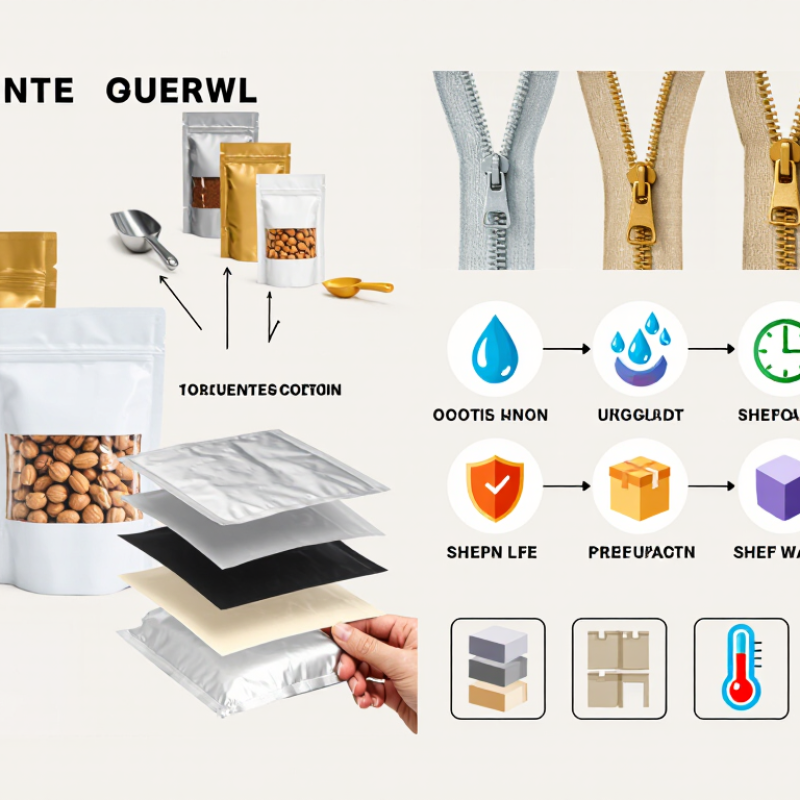
Define Product Risks: Moisture, Oxygen, Light, and Shelf-Life Targets
Before choosing a foil pouch, identify what can damage the product during storage and use. A roasted snack may lose crispness as moisture enters, while a powder may clump. Oxygen can turn oils stale, and light may fade color or affect sensitive ingredients. These risks depend on the recipe, processing, and package size. Define the main failure you need to prevent, rather than relying on a vague goal like “freshness.” Small details matter. A warm product sealed too soon can create condensation, and sharp pieces may stress pouch seals.
Turn each risk into a shelf-life target, such as acceptable texture or flavor after six months. Then ask a packaging specialist about water-vapor and oxygen transmission data for the complete pouch, not just its foil layer. A foil laminate can limit light and gas transfer, but seals, folds, and pinholes can weaken protection. Choose an opaque structure when light exposure is a concern; consider easy opening and resealing if the pouch will be used over several days. Test filled pouches under realistic heat, humidity, shipping, and storage conditions. Early shelf-life estimates are often imperfect, and that is worth admitting. Adjust the structure after checking actual product samples, seal integrity, and retained quality.
| Product Risk | Products Commonly Affected | What to Define | Foil Pouch Design Considerations | Useful Verification |
|---|---|---|---|---|
| Moisture gain or loss | Powders, dried foods, dehydrated ingredients, and products that must retain crispness | The product’s acceptable moisture range, water activity where relevant, and storage humidity | Use a continuous aluminum-foil barrier laminate when very low moisture transmission is required. Protect the foil layer from punctures, creases, and flex damage. | Specify water vapor transmission rate (WVTR) with test conditions, such as temperature and relative humidity. Check finished-pouch seals as well as the film. |
| Oxygen exposure | Products vulnerable to oxidation, including some nuts, coffee, oils, and oxygen-sensitive ingredients | Sensitivity to oxygen, acceptable oxidation or quality limits, headspace oxygen, and intended storage conditions | A foil layer can provide a strong oxygen barrier when intact. For oxygen-sensitive products, consider the filling atmosphere and an appropriate oxygen absorber if compatible with the product and process. | Specify oxygen transmission rate (OTR) and test conditions. Measure residual oxygen where relevant, and evaluate seal integrity and product quality over time. |
| Light exposure | Light-sensitive foods, oils, nutraceuticals, and ingredients whose color, flavor, or potency may change | Whether protection is needed from visible light, ultraviolet light, or both, based on product sensitivity and display conditions | An opaque aluminum-foil layer blocks light when the package has no unprotected windows. Check the complete package design, including closures and transparent sections. | Review light-transmission data or conduct product-specific light-exposure testing. Compare color, flavor, or active-content results with a protected control. |
| Shelf-life target | Any product requiring a defined period of acceptable quality and safety | Target duration, storage temperature and humidity, distribution conditions, and the product quality attributes that must be maintained | Select the barrier structure and pouch format together. Larger pouches, zipper areas, seals, and handling damage can affect real-world performance. | Validate shelf life in the final package under intended and, where appropriate, accelerated conditions. Confirm that accelerated results are suitable for the product. |
| Seal, puncture, and handling risk | Sharp-edged, heavy, oily, or frequently handled products | Fill weight, product shape, transport hazards, opening and reclosing needs, and expected handling | Choose suitable laminate thickness and seal design. Consider a protective outer layer and a format that limits stress at folds and corners. | Test seal strength, leaks, and package durability using methods appropriate to the product and distribution route. |
Note: Barrier targets are product- and process-specific. Request WVTR and OTR values together with their test methods and conditions; performance of the finished pouch can differ from flat-film results because of seals, folds, damage, and package geometry. Confirm final specifications through product-specific shelf-life testing.