In the world of manufacturing, the Plastic Injection Mold industry is evolving rapidly. Experts like Dr. Emily Chen, a leading voice in this field, believe, "The future of plastic injection molding lies in innovation and sustainability." This statement reflects the pressing need for change within the industry.
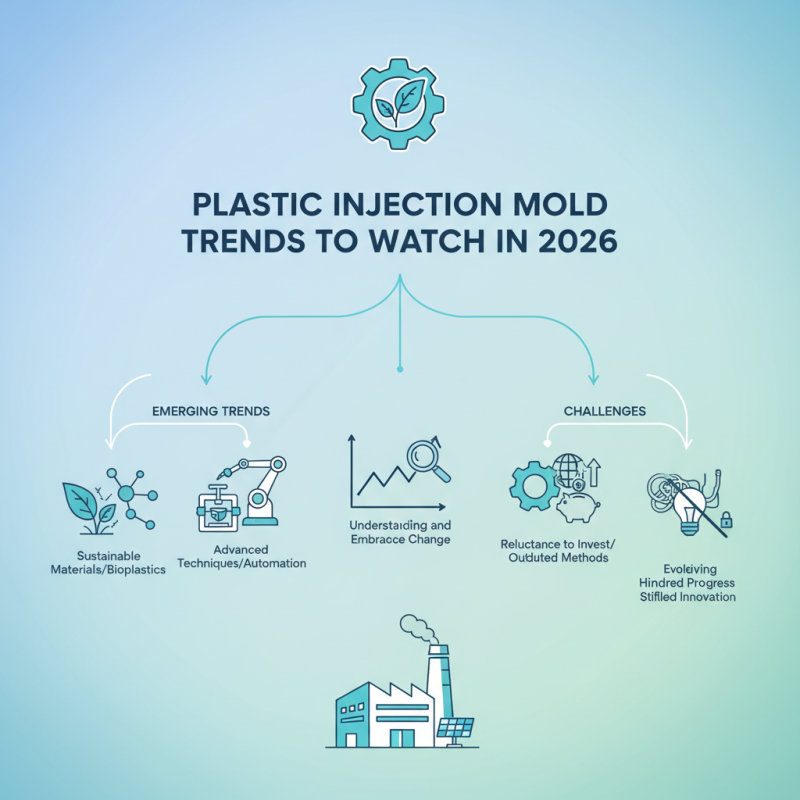
As we look ahead to 2026, several trends are emerging. These trends will significantly impact techniques, materials, and market demands. For instance, the shift towards more sustainable materials is not just a passing trend; it’s a necessary adaptation. Companies are experimenting with bioplastics, which could redefine standard practices.
However, challenges remain. Not all manufacturers are ready to invest in new technologies. Some continue to rely on outdated methods, potentially hindering progress. This reluctance could stifle innovation in the long term. Understanding and embracing change in the Plastic Injection Mold sector is crucial as we navigate the complexities of modern production.
The shift towards sustainable materials in plastic injection molding is undeniable. By 2026, the industry is expected to witness a 30% increase in the adoption of biodegradable and recycled materials. Companies are exploring alternatives to traditional plastics to reduce environmental footprint. For example, bio-based polymers made from corn, sugarcane, or other renewable resources are gaining traction.
However, the transition is not without challenges. The availability of these sustainable materials can be inconsistent. Cost remains a significant factor; many eco-friendly options are pricier than conventional plastics. This pricing issue complicates decisions for manufacturers balancing quality and sustainability.
Moreover, there is still much work needed in developing suitable formulations that meet performance standards. Not all sustainable materials can withstand high-temperature processes commonly used in injection molding. As engineers and researchers innovate, the search for reliable and affordable sustainable solutions intensifies. This ongoing evolution will redefine industry practices well into the next decade.
As we approach 2026, the landscape of plastic injection mold design is undergoing significant transformations. Emerging technologies are reshaping production techniques, allowing for greater efficiency and precision. According to recent industry reports, around 45% of manufacturers adopt advanced simulation software. This adoption can enhance their design processes and minimize physical prototypes.
Additive manufacturing is also making strides in injection mold production. This technique allows for rapid prototyping and reduces lead times by up to 30%. Furthermore, the integration of AI in mold design is improving predictive maintenance. These shifts can lead to reduced downtimes and increased overall productivity.
Tip: Embrace training opportunities for staff on new technologies. This investment in skills ensures your team adapts swiftly to changes.
It's important to acknowledge the challenges posed by these trends. Not all companies can afford high-tech solutions. Balancing investment with production needs can be daunting.
Tip: Start small with technology implementation. Assess what fits your current capabilities before scaling up. This approach minimizes risk and enhances understanding.
| Trend | Description | Impact on Production | Estimated Adoption Rate |
|---|---|---|---|
| Digital Twins | Utilizing virtual models to simulate and optimize mold performance. | Enhances efficiency and reduces downtime. | 75% |
| Automation | Incorporating robotics for mold handling and processing. | Increases speed and precision in manufacturing. | 68% |
| Sustainable Materials | Using bio-based and recyclable polymers in injection molding. | Reduces environmental impact and meets consumer demand. | 80% |
| Additive Manufacturing | Integration of 3D printing technology for mold prototypes and tooling. | Speeds up the prototyping phase and reduces cost. | 65% |
| Smart Sensors | Embedding sensors in molds for real-time monitoring. | Improves quality control and maintenance scheduling. | 70% |
The injection molding industry is evolving rapidly, driven by automation and AI. According to a recent report, automation can reduce production costs by up to 30%. This drastic decrease opens doors for small to medium enterprises. However, integration is not without challenges. Many manufacturers face resistance from workers fearing job loss. The balance between efficiency and workforce dynamics is crucial.
AI's role in enhancing decision-making is significant. Predictive maintenance powered by AI can minimize downtime, increasing overall efficiency. A study revealed that AI implementation improved uptime by 20%. Yet, not all companies can seamlessly adapt to this shift. The learning curve for AI tools is steep, and some employees find the tech daunting.
Despite the benefits, companies must tread cautiously. The reliance on machines risks creating a disconnect. Human oversight remains vital for quality control. Too much automation can lead to errors going unnoticed until it’s too late. Thus, while automation and AI offer promising advantages, the human element must not be overlooked.
The plastic injection molding industry is evolving rapidly. By 2026, forecasts suggest significant growth in this sector. Increasing demand for lightweight materials across various industries drives this trend. The automotive and healthcare sectors are major contributors to this growth. Their need for precision and efficiency fuels innovation in molding technologies.
Emerging technologies like automation are changing production methods. Robotics streamline processes, making them more efficient. However, challenges remain. Several companies still struggle with integrating these advanced systems. The initial investment can be a barrier. Still, the benefits often outweigh the costs in the long run.
Sustainability is another focus. Eco-friendly materials are being prioritized. Companies are investing in research to develop greener plastics. This shift reflects a broader awareness of environmental impact. Yet, some manufacturers find it hard to balance cost and sustainability. They question if green materials offer the same performance. The answers will shape the industry's future as 2026 approaches.
The plastic injection molding industry is rapidly evolving, driven by changing consumer demands. Customization is becoming essential in meeting diverse preferences. Consumers now expect products tailored to their needs. This shift pushes manufacturers to adopt more flexible production methods.
Flexibility in injection molding means adjusting to trends quickly. Shorter production runs are becoming common. This approach allows companies to respond to market changes. However, it also introduces challenges. Balancing efficiency with the need for variety can be tough. Adapting machinery and processes requires investment and time.
As brands seek unique designs, the pressure on manufacturers increases. Orders may change frequently, complicating workflows. Not all companies can adapt at the same pace. Those stuck in traditional methods risk falling behind. Flexibility is the way forward, but achieving it is a constant work in progress.