What is a strong base anion resin and how is it used?
strong base anion resin is an essential component in various industrial processes. It plays a critical role in water treatment, separating anions from solutions. This resin is designed to have a high capacity for ion exchange, enabling efficient removal of unwanted substances.
In many applications, strong base anion resin is used for deionization and purification. Its ability to attract and hold negatively charged ions makes it valuable. Industries like pharmaceuticals and electronics rely heavily on this technology. Yet, the effectiveness of these resins can fluctuate based on conditions such as temperature and concentration.
Despite its benefits, challenges exist. For instance, the resin might degrade over time or lose efficiency in certain environments. Regular monitoring is essential to ensure optimal performance. Understanding how strong base anion resin functions can help users make informed choices about its applications.
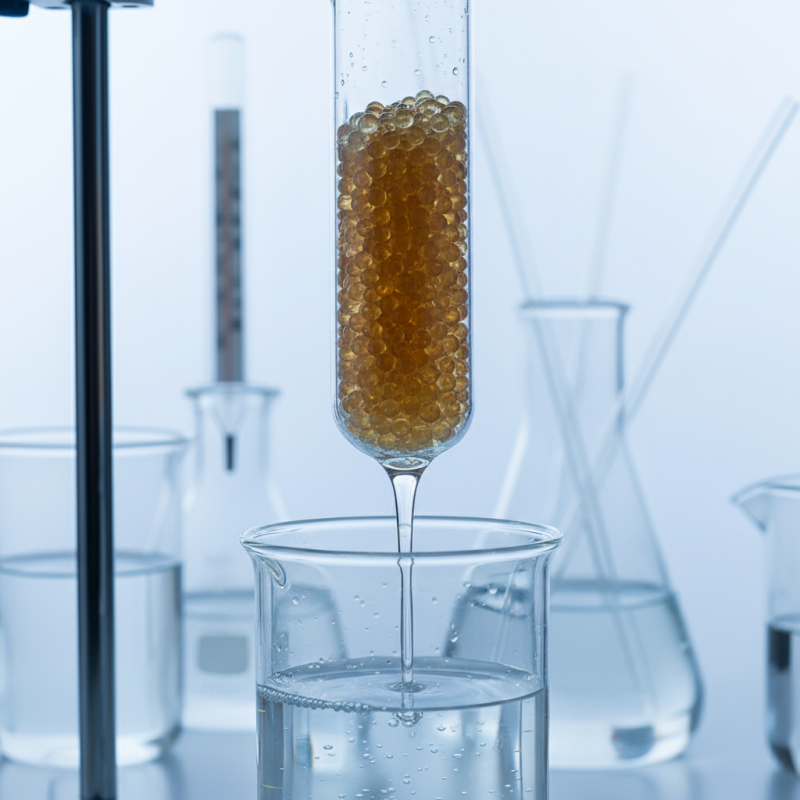
What Defines a Strong Base Anion Resin in Water Treatment Applications
In water treatment, strong base anion resins play a vital role. These resins contain quaternary ammonium groups that help attract and exchange anions. They are primarily used for deionization and removal of unwanted contaminants from water. Strong base anion resins can capture a wide range of anions, including nitrate, sulfate, and phosphate.
The effectiveness of these resins is defined by their ability to function in various pH levels. They can efficiently operate in alkaline environments. This makes them suitable for treating industrial wastewater or even drinking water. However, their performance can be influenced by factors like temperature and flow rate. If not managed correctly, resins may experience fouling, which affects their efficiency.
Moreover, regeneration of these resins is a crucial aspect of their lifecycle. Proper techniques are needed to restore their ion-exchange capacity. Sometimes, users overlook the importance of monitoring resin health, which can lead to issues. Understanding these elements is key to effective water treatment.
Key Chemical Properties and Functional Mechanisms of Strong Base Anion Resins
Strong base anion resins are essential in various chemical processes. They have unique properties that facilitate their function. These resins are designed to remove anions from solutions effectively. They consist of a cross-linked polymer matrix that interacts with negatively charged ions.
One key chemical property is their high capacity for ion exchange. They can bind to various anions, such as chloride and sulfate. This binding happens through electrostatic interactions. The functional mechanisms involve a strong affinity for these ions, allowing them to displace others in solutions. When an acid forms, the resin can regenerate and continue functioning.
However, using strong base anion resins isn’t without challenges. They may face fouling due to organic matter or carbonate buildup. Regular maintenance is vital for optimal performance. User experience often includes trial and error to find the best conditions. In some cases, regeneration may not restore the resin to its original capacity. Understanding these limitations is crucial for effective application.
What is a strong base anion resin and how is it used? - Key Chemical Properties and Functional Mechanisms of Strong Base Anion Resins
| Property | Description |
| Type | Strong Base Anion Exchange Resin |
| Functional Group | Quaternary Ammonium |
| Capacity | High anion exchange capacity (4-5 meq/mL) |
| pH Range | Effective between pH 0-14 |
| Applications | Water treatment, waste treatment, and chemical processing |
| Regeneration | Regenerated using a concentrated salt solution |
| Resistance to Oxidants | Moderately resistant, varies by manufacturer |
Industries Utilizing Strong Base Anion Resins: Applications and Benefits
Strong base anion resins are essential in various industrial applications. They operate by exchanging anions in liquids, effectively removing undesirable components. These resins have a high capacity for anion exchange, making them pivotal in water treatment processes. In power generation, they help purify boiler feed water. Reports indicate that efficient anion resins can improve water clarity by 30%.
In the pharmaceutical industry, these resins aid in producing high-purity water essential for drug formulation. In manufacturing, they help maintain process integrity by preventing contamination. Their ability to handle extreme pH levels is beneficial. However, some applications reveal limitations. Over time, resins may experience degradation, affecting performance. Regular monitoring and maintenance are crucial for optimal function.
Additionally, strong base anion resins play a role in food and beverage processing. They remove unwanted ions, enhancing product safety. Surprisingly, their efficacy can vary based on the feed water composition. Understanding this variability is key for manufacturers. Mismanagement of resin replacement can lead to quality issues. Users must frequently assess operational conditions to ensure reliability.
Applications of Strong Base Anion Resins
Strong base anion resins are increasingly utilized across various industries for their ability to remove anions from solutions. The chart above illustrates the market demand for strong base anion resins in different sectors, showcasing significant applications in water treatment, pharmaceuticals, food and beverage, chemical processing, and electronics manufacturing.
Comparative Analysis of Strong Base vs. Weak Base Anion Resins' Performance
Strong base anion resins are crucial in water treatment processes. They excel in capturing negatively charged ions. This capability makes them effective in removing contaminants from water. Many industries rely on them for purification.
In contrast, weak base anion resins offer different advantages. They are less aggressive in ion exchange. This can be beneficial when treating water with specific contaminants. However, they might struggle with high concentrations of certain ions. Performance varies greatly depending on the application. Some users find weak base resins less effective than expected.
The choice between strong and weak base anion resins largely depends on the specific needs. Strong bases are reliable for rapid ion exchange. Weak bases can be more selective, but their efficiency can fluctuate. Consideration of water chemistry is vital. Users should assess their specific situation, even if it means reevaluating past choices.
Regeneration Processes for Strong Base Anion Resins: Best Practices and Data
Regeneration of strong base anion resins is crucial for efficient operation. Commonly used methods include chemical and thermal regeneration. Each method has its pros and cons. For example, chemical regeneration often involves caustic solutions. These can effectively remove adhered contaminants. However, they may also lead to resin degradation over time.
According to a 2022 industry report, approximately 25% of resin life can be lost due to improper regeneration practices. This statistic emphasizes the need for best practices. Awareness of the specific requirements for your resin type is key. Monitoring performance regularly can help identify regeneration needs. A well-timed regen process can restore up to 95% of a resin's efficiency.
Understanding the chemistry involved in regeneration is essential. For instance, pH levels during chemical regeneration can significantly impact outcome. Inaccurate measurements can result in incomplete cleaning. This leads to reduced performance and increased operating costs. Balancing rigorous cleaning with minimal damage is a continuous challenge in resin management.
 English
 Español de México