Top 10 Tips for Using a PU Foam Lamination Machine?

The manufacturing sector has been revolutionized by advancements in technology, particularly with the use of PU foam lamination machines. Reports indicate a 20% increase in production efficiency when utilizing these machines. An expert in the field, Dr. Emily Rodriguez, states, "Choosing the right machinery is critical for optimal results." This underscores the importance of understanding how to effectively operate a PU foam lamination machine.

In the fast-paced world of manufacturing, knowing the top tips for using a PU foam lamination machine can make all the difference. Industry standards report that improper use can lead to a 30% increase in waste and defects. This raises the need for training and knowledge sharing among workers. Simple steps can often be overlooked, yet they are essential for achieving quality results.

Competitive manufacturers constantly seek ways to enhance their processes. The PU foam lamination machine is not just a tool but a fundamental element in this journey. As we explore this topic, it’s crucial to acknowledge that every machine has its quirks. Understanding these nuances can lead to improvements, but it requires diligence and reflection on operational practices.
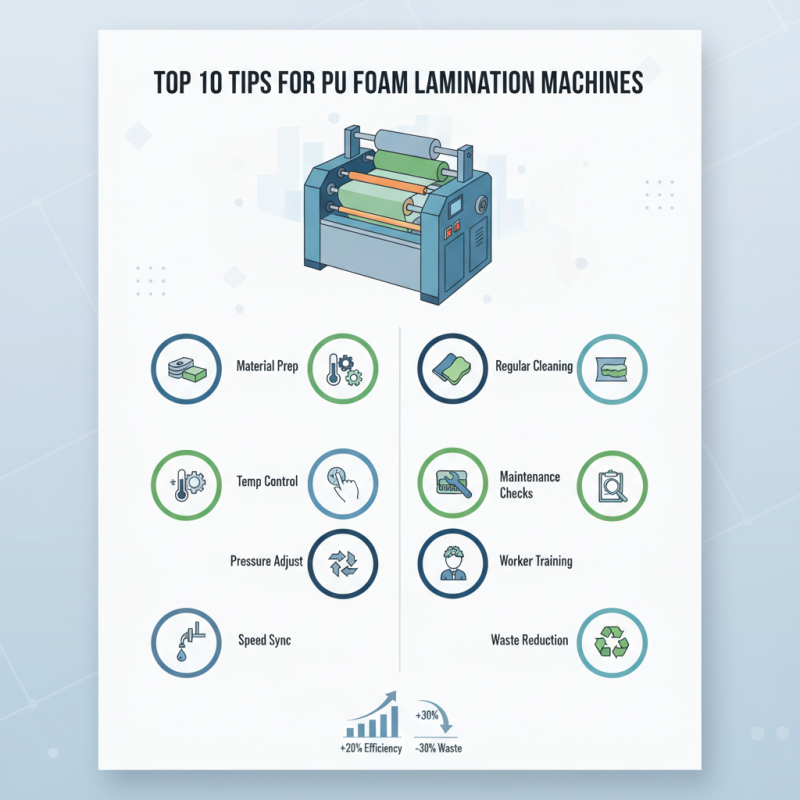
Top 10 Tips for Using a PU Foam Lamination Machine?

Understanding PU Foam Lamination Machines and Their Applications

PU foam lamination machines play a crucial role in various industries. They are widely used for furniture, automotive, and construction applications. Recent industry reports indicate that the global market for PU foam is expected to grow at a CAGR of over 6.5% from 2022 to 2030. This growth signifies the increasing demand for high-quality foam products.

Understanding how these machines work is essential for maximizing their potential. PU foam lamination involves bonding foam layers with other materials, such as fabric or plastic. This process enhances durability and aesthetics. However, challenges may arise. For instance, inconsistent pressure during lamination can lead to weak bonds. Operators may overlook the importance of regular maintenance, resulting in machine inefficiencies.

Furthermore, temperature control is critical. If the temperature is too high, it may degrade the foam quality. If it’s too low, adhesion might fail. According to a study by the Foam Association, improper temperature settings account for nearly 20% of production flaws. It is vital to remember that meticulous attention to these factors can significantly enhance product quality and productivity.

Top 10 Tips for Using a PU Foam Lamination Machine

Key Features to Consider When Choosing a PU Foam Lamination Machine

When choosing a PU foam lamination machine, several key features are essential. Look for the machine's adhesive application method. This impacts the quality of the lamination. A precise and even application ensures a strong bond. Moreover, consider the machine's roller system. Smooth rollers help avoid wrinkles and ensure consistent lamination speed.

Tips for using the machine effectively include regular maintenance. Check for wear and tear on parts that may affect performance. Keeping the machine clean can also prolong its lifespan. Consider the machine's temperature control settings. Incorrect temperatures can damage foam or adhesives. Test different settings to find the best results for your specific materials.

Lastly, a user-friendly interface is crucial. Complicated controls can lead to errors. Training staff may require time if the machine is difficult to operate. Always seek feedback from operators for improvements. Fine-tuning the process based on their insights can enhance productivity and quality.

Operational Guidelines for Achieving Optimal Foam Laminating Results

When operating a PU foam lamination machine, understanding the guidelines can significantly enhance results. Proper temperature control is crucial. Studies show that incorrect temperature settings can lead to poor adhesion, affecting strength. The optimal range usually lies between 100°C to 130°C, depending on the foam type. Regularly check the machine's thermostat, as fluctuations can lead to inconsistent output.

Using the right pressure is another essential factor. Insufficient pressure can cause the lamination to delaminate after some time. Aim for a pressure range of 0.5 to 2 MPa during the process. This ensures that the materials bond effectively, enhancing durability. It’s important to conduct trial runs to find the sweet spot for your specific materials.

Cleaning the machine regularly cannot be overlooked. Residue from previous jobs can affect new laminations. According to industry reports, nearly 25% of lamination failures can be attributed to poor machine maintenance. Keeping the rollers and surfaces clean is essential for achieving consistent results. Finally, operators should document each run’s parameters. This data can help identify patterns and areas needing improvement over time.

Common Troubleshooting Techniques for PU Foam Lamination Machines

PU foam lamination machines can sometimes experience challenges. Understanding common troubleshooting techniques is essential for smooth operation. One frequent issue is uneven foam application. This could be due to an incorrect roller pressure. Adjusting the pressure often resolves this problem.

Another common issue is air bubbles trapped in the foam. These bubbles can ruin the final product. To minimize this, ensure proper mixing of components. It’s essential to check the mixing ratio. Sometimes, just a small mistake leads to bigger problems. Regular maintenance of the machine is also vital. Dust and debris can hinder performance.

Users often overlook the importance of temperature settings. If the temperature is too low, it may lead to poor adhesion. Conversely, excessive heat can damage foam quality. Regularly check and calibrate temperature settings. These tasks, while simple, require careful attention. Recognizing these potential pitfalls will lead to better outcomes.

Safety Precautions in PU Foam Lamination Operations and Maintenance

Safety is a crucial aspect of using a PU foam lamination machine. Operators must wear appropriate personal protective equipment (PPE) at all times. This includes gloves, safety goggles, and masks. The foam's chemicals can be hazardous. Regular training sessions help maintain safety awareness among staff.

Before initiating any operation, a thorough inspection of the machine is essential. Check for any signs of wear, leaks, or malfunction. Overlooking a small issue can lead to serious accidents. It's wise to create a checklist for daily inspections. This habit encourages responsibility and attention to detail.

During operation, keep the work area clean and organized. Clutter can lead to tripping hazards or equipment malfunctions. Make sure that emergency exits are unobstructed. Communication is key; ensure that everyone on the team knows the protocols. Unexpected situations can arise, and quick responses are critical. Reflecting on past mistakes enhances learning and improves overall safety practices.

Top 10 Tips for Using a PU Foam Lamination Machine

Tip Number Tip Description Safety Precautions
1 Always wear appropriate personal protective equipment (PPE). Use safety goggles, gloves, and masks.
2 Ensure the machine is properly set up and calibrated. Check for leaks and proper alignment before operation.
3 Keep the work area clean and free of obstructions. Maintain clear pathways for emergency exits.
4 Follow the manufacturer's instructions and guidelines. Understanding the manual reduces risks of accidents.
5 Regularly perform maintenance checks on the machine. Schedule periodic inspections to catch issues early.
6 Train all personnel on the machine's operation. Ensure that everyone is qualified to operate safely.
7 Use the correct materials as specified. Incompatible materials can lead to dangerous reactions.
8 Monitor machine for unusual sounds or movements during operation. Report any anomalies immediately.
9 Keep hands and loose clothing away from moving parts. Be aware of your surroundings while operating.
10 Ensure proper ventilation in the workspace. Chemical fumes can be hazardous without airflow.