What Are the Top Types of Thermal Printer Paper in 2026?
Thermal Printer Paper is not a one-size-fits-all supply. In 2026, the right roll depends on the printer, the printed item, and how long the image needs to remain readable. A checkout receipt has different needs from a shipping label or a stored medical record. Heat, friction, sunlight, and handling can all affect print quality over time.
This guide compares the main options, including standard direct thermal paper, top-coated rolls, linerless media, and durable synthetic materials. It explains where each type tends to work well and what to check before buying. Some distinctions can be confusing: “top-coated” describes a protective surface, while “direct thermal” describes how the printer creates an image. They are related, but not interchangeable terms.
Small details matter. A roll that fits the printer but has the wrong width can cause jams or poor alignment. A low-cost paper may also fade sooner than expected in a hot vehicle or sunny shop window. No paper solves every problem. Even premium stock has limits, and product labels do not always make those limits obvious. Check the printer specifications, compare coating and durability claims, and test a sample under real working conditions. The following sections help make those choices clearer, without assuming that the most expensive option is always the best.
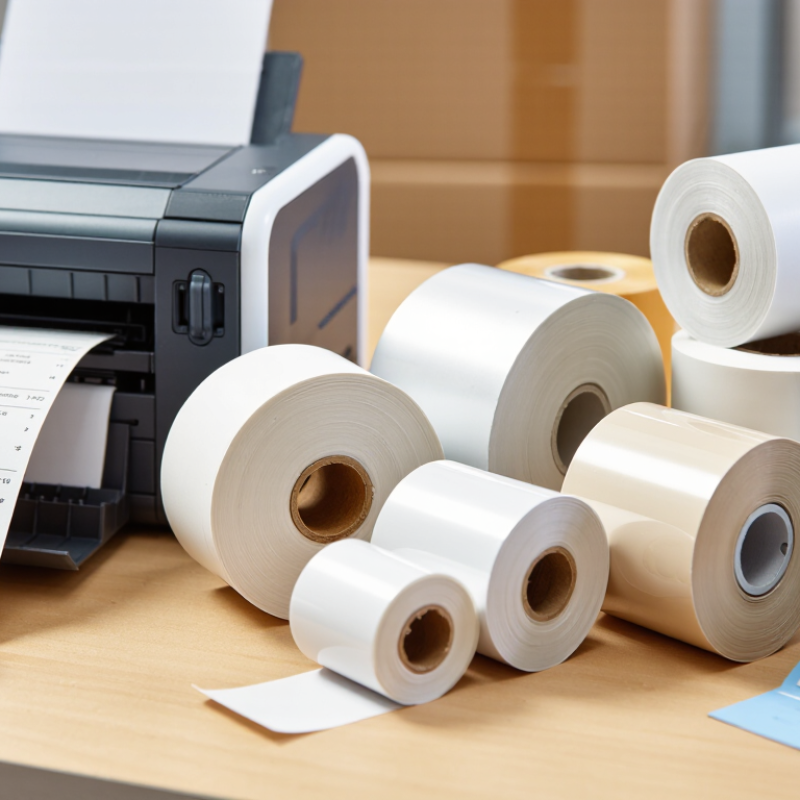
How Thermal Printer Paper Works and How Its Types Differ
Thermal paper forms an image when a printer’s heated printhead activates chemicals in its coating. In direct thermal stock, heat triggers a reaction between a dye and a developer, creating dark marks without ink or a ribbon. Thermal-transfer printing works differently: the printhead heats a ribbon, which deposits ink onto the paper or label. That difference affects supplies, image durability, and printer compatibility. Check the printer’s specifications before choosing a roll.
Common types include uncoated receipt paper, top-coated paper, and thermal-transfer label stock. Uncoated rolls suit short-lived receipts, but heat, sunlight, and friction can fade them faster. A topcoat adds a protective layer; it can help resist oils and moisture, though performance varies by grade. Thermal-transfer stock needs a ribbon but can produce longer-lasting labels. Not all rolls behave alike. Fortune Business Insights’ 2023 thermal-paper market report valued the global market at about US$4.3 billion and projected growth to roughly US$6.3 billion by 2032. That scale reflects broad use, not equal quality across grades. A practical test matters: print a sample, rub it, and leave it under ordinary light. The result may surprise you.
Top Types of Thermal Printer Paper in 2026
How thermal printer paper works—and how common types differ by construction.
Direct thermal paper forms images when heat reacts with its heat-sensitive coating. Top-coated paper adds a protective layer; synthetic thermal media uses a synthetic substrate; and linerless paper combines an adhesive with a release surface instead of a separate backing liner. Constructions can vary by product.
Direct Thermal Paper: Composition, Uses, and Limitations
Direct thermal paper is made from a paper base coated with heat-sensitive chemicals. The coating commonly contains a colorless dye, a developer, and additives that help control sensitivity. When a printer’s heated printhead touches the surface, the dye and developer react, creating dark text or images. No ink or ribbon is needed. Simple, but not magic.
This paper suits receipts, shipping labels, and queue tickets that need quick, quiet printing. Its performance depends on the coating and the printer’s heat settings. A coating that is too sensitive may darken during handling; one that is poorly matched may print faintly. Testing a sample roll can reveal issues before routine use.
There are trade-offs. Heat, sunlight, friction, oils, and some cleaning chemicals can fade or darken the image. A receipt left on a warm car dashboard may become difficult to read. Direct thermal records are therefore less suitable for documents that must remain legible for many years. Storage conditions matter, too. Keep paper away from heat and direct light, and check supplier guidance for expected image life. That guidance is useful, though real-world storage is rarely perfect.
Thermal Transfer Paper: Coated Stocks and Applications
Thermal-transfer paper uses a coated face stock and a separate ribbon. Heat transfers the ribbon’s ink onto the paper, producing a durable image. Coatings influence print sharpness, ink adhesion, and resistance to smearing. Common choices include smooth, bright white stocks for shipping labels and textured or specialty-coated papers for retail tags. The right grade depends on the printer, ribbon, and label’s expected handling.
Smithers’ 2023 report, The Future of Label Printing to 2028, places the global label market at about $44.8 billion in 2023. This figure covers many label technologies, not thermal-transfer paper alone, so it is useful market context rather than a direct measure of coated-stock demand. Small details matter. A warehouse label may need a tough topcoat to withstand rubbing, while a shelf tag may prioritize crisp small text. Test the paper with the intended ribbon and printer: coating quality varies, and a sample that looks good on arrival can still perform poorly after handling.
Specialty Thermal Paper for Labels, Tickets, and Receipts
Thermal paper is not one uniform roll. Receipt stock is usually designed for fast, clear printing at checkout, while label stock must withstand handling, moisture, or brief outdoor exposure. Top-coated direct thermal paper adds a protective layer that can improve resistance to oils and abrasion. For shipping or shelf labels, test the printed surface against the actual conditions. A quick rub test helps, but it cannot replace a full-use trial.
Tickets need different priorities. A concert ticket may require a crisp barcode and readable text after being folded in a pocket; queue tickets need reliable feeding and clear numbering. Linerless thermal labels, which have no backing paper, can reduce waste in suitable workflows, though adhesive buildup may create maintenance issues. Small details matter. Store sample rolls near the printer before changing suppliers, then check curl, image density, and feed performance.
Grand View Research estimated the global thermal paper market at USD 4.36 billion in 2023 and projected 6.6% annual growth from 2024 to 2030 in its Thermal Paper Market report. That estimate covers multiple uses, not just receipts or specialty labels. It signals continued demand, but it does not identify the best grade for a specific printer. Match paper width, core size, coating, and adhesive to the device and end use; even a good paper can disappoint when the combination is wrong.
 English
 Español de México