What Is a Zipper Bag Packing Machine?

A Zipper Bag Packing Machine forms, fills, and seals pre-made pouches with resealable zipper closures. Depending on its design, it may also open each pouch, check the zipper area, and print a date code. The zipper itself is small, but it changes the job: the machine must open the pouch cleanly, position the product, and protect the seal from crumbs or liquid. A crooked zipper can turn a finished pack into rework.

The market context is substantial. The Flexible Packaging Association’s 2023 State of the U.S. Flexible Packaging Industry report valued the U.S. sector at $42.9 billion in 2022. That figure covers flexible packaging broadly, not zipper-bag machines alone. Still, it shows why reliable pouch handling matters to food, household, and personal-care brands. PMMI’s industry research also tracks automation, labor availability, and productivity as recurring investment concerns. These pressures make machine selection practical, not merely technical.

PMMI Chief Economist Jorge Izquierdo’s analysis offers a useful lens: automation must address real production constraints. The line below is a paraphrase, not a verbatim quotation: “Choose equipment for the package and process, not speed alone.” A machine rated for high output may struggle with soft film, mixed pouch sizes, or frequent changeovers. That detail is easy to underestimate. This guide explains how zipper-bag machines work, which components matter, and what buyers should check before comparing models. It also leaves room for an honest question: when is automation worth the cost?
What Is a Zipper Bag Packing Machine?

Definition and Scope: Premade Zipper Pouches vs. Form-Fill-Seal Bags

A zipper bag packing machine fills and seals pouches with a reclosable zipper, but the name covers two different production routes. With premade zipper pouches, the zipper and pouch shape already exist. The machine opens each pouch, fills it, then seals above the product. Operators often check that the pouch opens fully and that crumbs or powder have not landed on the seal area. Small details matter.

Form-fill-seal equipment starts with rollstock film and forms the bag on the machine. A zipper may be added from a separate tape during forming, so zipper placement, film tension, and sealing temperature become part of the line setup. This can reduce handling of premade bags, but it also means more process variables. Not every zipper pouch design suits every machine. The Flexible Packaging Association’s 2024 State of the U.S. Flexible Packaging Industry Report puts 2023 U.S. flexible packaging sales at $42.9 billion, showing the scale of the format category, not a direct measure of zipper-machine demand. The boundary can blur: equipment descriptions sometimes use “zipper bag” broadly, while buyers need to confirm whether the machine accepts finished pouches or forms bags from film. Check pouch dimensions, zipper position, and changeover needs before comparing line speeds. One overlooked test can be expensive.

Operating Sequence: Bag Pickup, Opening, Filling, Zipper Closing, and Sealing

What Is a Zipper Bag Packing Machine?

Operating Sequence: Bag Pickup, Opening, Filling, Zipper Closing, and Sealing

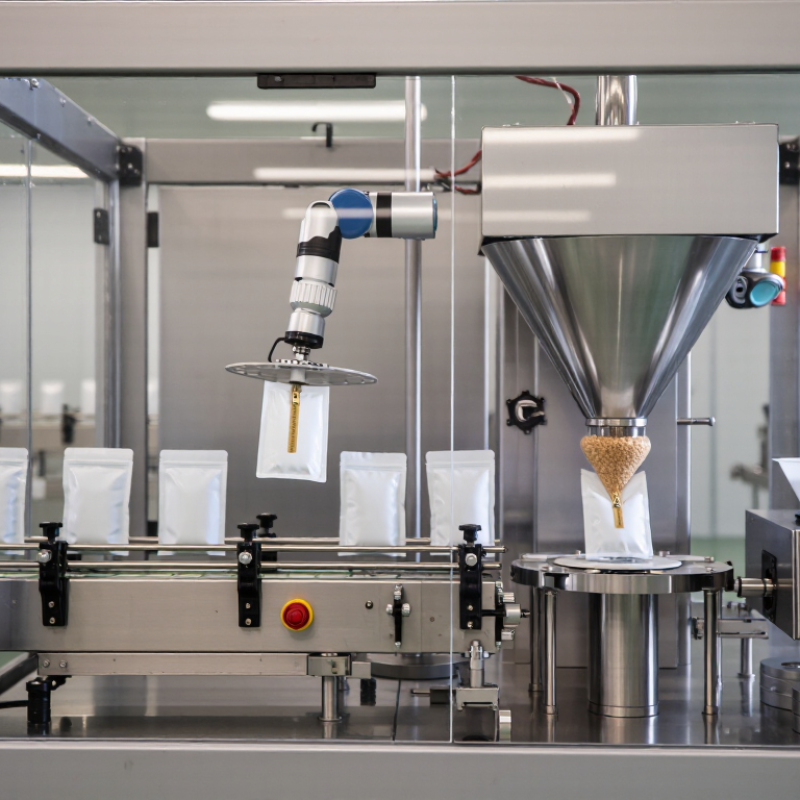
A zipper bag packing machine moves each pouch through a controlled sequence. Suction cups or grippers lift one bag from the magazine and place it at the opening station. Air jets or mechanical fingers separate the pouch walls. A sensor checks that the mouth is open before filling begins. If bags vary in stiffness, this handoff can be less smooth than expected. Operators may need to adjust pickup pressure or magazine guides.

At the filling station, a measured dose drops into the pouch while the machine supports its sides. Product near the zipper can prevent a clean closure, so settling or gentle vibration may help. Closing jaws press the zipper tracks together. The top edge then passes through heated sealing bars, which create a seal above the zipper. Temperature, pressure, and dwell time matter. A seal can look neat yet fail if settings are poorly matched to the packaging material. That detail deserves regular checking.

Tips: Keep the zipper area clear and inspect sample seals during startup. Check pouch alignment after changeovers. Small misfeeds happen. Record settings that work, but verify them when bags or products change. A reliable cycle depends on both machine setup and consistent pouch quality.

Machine Components: Feeders, Dosing Systems, Zipper Pressers, and Seal Jaws

A zipper-bag packing machine coordinates several components to fill and close resealable pouches. Feeders align empty bags and present each pouch to the filling station. A steady handoff matters: bags that arrive tilted can disrupt dosing or leave the zipper area contaminated. Operators should check pouch position, film tension, and product flow during changeovers.

The dosing system measures each portion by weight, volume, or product-specific settings. Its accuracy depends on the material; free-flowing grains behave differently from powders or irregular pieces. Zipper pressers bring the interlocking tracks together before sealing, while heated seal jaws close the pouch below the zipper. Temperature, pressure, and dwell time need careful adjustment. Small details matter. An overly hot jaw can wrinkle film, while a weak seal may leak. The Flexible Packaging Association’s 2024 State of the U.S. Flexible Packaging Industry report estimates 2023 U.S. flexible-packaging sales at $42.9 billion, about 21% of the packaging market. That scale makes consistent operation important, but the report does not prescribe machine settings. A practical check is to inspect zipper engagement and seal samples after each setup change; these checks can be easy to rush.

What Is a Zipper Bag Packing Machine? - Machine Components: Feeders, Dosing Systems, Zipper Pressers, and Seal Jaws

A zipper bag packing machine forms or handles bags with a resealable zipper, fills them with product, and seals the package. Component layouts and operating settings vary by machine, packaging material, product, and bag format.

Component Main function Common configurations Key operating considerations Typical checks
Bag feeder and opening station Picks or advances empty bags, holds them in position, and opens the mouth for filling. Magazine with pick-and-place suction cups; grippers; air-assisted opening. Bag dimensions, film stiffness, zipper position, and static can affect pickup and opening reliability. Confirm single-bag pickup, open-mouth detection, and correct bag registration.
Dosing system Measures and delivers the target quantity of product into each bag. Multihead weigher or linear weigher for many solids; auger filler for powders; pump or piston filler for liquids and pastes. Selection depends on product flow, particle size, density, fragility, and required fill accuracy. Check dose weight or volume, product buildup, spillage, and the timing of discharge.
Zipper presentation and alignment Positions the zipper profile so it is accessible and aligned during bag opening and closing. Pre-attached zipper on premade bags; zipper feed and cutting equipment on some form-fill-seal designs. Zipper type, profile orientation, bag width, and film registration determine the required setup. Inspect profile alignment and verify that the zipper area is free of product contamination.
Zipper presser or closing station Presses the mating zipper profiles together to close the resealable feature. Matched rollers or opposing pressure elements; some machines use a dedicated zipper-closing mechanism. Pressure, alignment, and contact must suit the zipper profile; excessive force may deform the profile or bag film. Open and close sample bags by hand and check for continuous engagement across the zipper width.
Seal jaws Apply heat and pressure to form the package’s permanent top or transverse seal. Heated sealing bars or jaws; jaw shape and seal pattern depend on the bag design. Temperature, dwell time, and pressure are set for the packaging laminate and seal location; no single setting suits all films. Check seal continuity, wrinkles, burn-through, product in the seal, and seal strength using an appropriate test.
Controls and sensors Coordinate machine sequence and monitor bag presence, position, temperature, and faults. PLC and operator interface; photoelectric sensors; temperature controllers; optional checkweigher interface. Sensor placement and settings must match the bag material, print registration, and production sequence. Test alarms and interlocks, confirm displayed settings, and verify that detected faults stop or reject affected packs as configured.

Actual component designs and performance depend on the machine configuration, bag format, product, and packaging material. Consult the machine documentation and validate settings with production trials.

Typical Output: Roughly 20–60 Pouches per Minute, Depending on Product

A zipper bag packing machine may produce roughly 20–60 pouches per minute, but that figure is a working range, not a guarantee. At those rates, the line handles about 1,200–3,600 pouches per hour before stops and changeovers. Small, free-flowing pieces may feed smoothly. Powder can create dust near the seal, while sticky or irregular products may slow filling. Even the zipper matters: bags must open fully, stay aligned, and seal without trapping product. It can be fiddly.

The Flexible Packaging Association’s 2024 State of the U.S. Flexible Packaging Industry report estimated U.S. flexible-packaging sales at about $42.9 billion in 2023. That scale reflects broad demand, not a promise that every zipper-bag line runs at high speed. When evaluating a machine, ask for a sustained rate using your actual pouch size and product. Request a timed trial, then check seal quality, fill accuracy, and rejects—not just the display counter. A quoted 60 pouches per minute may describe ideal conditions. Real production can be lower, and that gap deserves attention.

Quality Testing: ASTM F88/F88M Seal Strength Reported in N/25 mm

For a zipper bag packing machine, seal strength testing checks how firmly the package layers are joined. ASTM F88/F88M measures the force required to separate a flexible-package seal. A tester pulls a cut strip at a controlled speed while recording force. The result is commonly reported in N/25 mm, making readings easier to compare across specimens of similar width. Small details matter.

Record the specimen width, test configuration, conditioning, and calculation method with each result. Depending on the method used, report average force or peak force; do not compare unlike measurements as if they were identical. Watch the failure mode too: the seal may peel apart, tear the film, or stretch before separating. A strong number alone does not confirm a leak-free package.

On a zipper bag line, seal readings can help assess changes in temperature, pressure, dwell time, or film alignment. For example, a crease near the zipper can create uneven contact, even when the machine settings appear stable.

Higher strength is not always better; excessive heat may deform the zipper profile or make the package difficult to open. Real production is less tidy than a lab test. Use repeat specimens and investigate variation before changing settings.