Who Is the Best Combi Case Erector Manufacturer in China?

Choosing the best Combi Case Erector manufacturer in China takes more than comparing catalog speeds. A case erector must open each blank cleanly, form square cartons, and keep pace without frequent stoppages. At the end of a production shift, small details matter: glue patterns, changeover time, guarding, and access to replacement parts. Not speed alone.

The International Federation of Robotics’ World Robotics 2024 report recorded 541,302 industrial robots installed worldwide in 2023, a 10% increase over 2022. That figure reflects broader factory automation, not case erectors specifically. It does, however, show why buyers should examine controls, integration capability, and service support alongside machine output. IFR President Marina Bill observed, “The global operational stock of industrial robots has reached a new record of about 4 million units.” Her comment points to a larger automation trend, though it cannot establish which supplier makes the best carton-forming equipment.

A credible comparison should therefore test evidence, not promises. Ask manufacturers for cycle-rate conditions, carton-size ranges, acceptance-test records, spare-parts lead times, and references from comparable plants. Video demonstrations help, but a clean showroom run is not a full production test. No ranking is perfect; buyer requirements differ, and published specifications may omit awkward changeovers or difficult board grades. This guide evaluates Chinese Combi Case Erector manufacturers through those practical measures, while treating unsupported claims with caution.
Who Is the Best Combi Case Erector Manufacturer in China?

What Is a Combi Case Erector?

A combi case erector is a packaging machine that turns flat corrugated blanks into open cartons and seals their bottom flaps. “Combi” usually means the machine can handle more than one carton size or format within defined adjustment limits. An operator loads a stack of blanks into the magazine. The machine feeds one blank, folds its panels, squares the case, and applies tape or adhesive underneath. The result is a ready-to-fill box. It does not pack products; that is a separate step.

On a typical line, sensors check blank position and carton presence, while guides help keep folds aligned. Changeovers may require adjusting rails, guides, or machine settings. This can reduce manual case forming, but “combi” does not mean every box size runs automatically. Check the supported dimensions, blank quality requirements, changeover method, and cycle rate against actual production needs. Corrugated sheets can vary. Warped blanks or crushed edges may cause misfeeds, even on a well-adjusted machine. Trials with real cartons reveal practical limits that a specification sheet may not show. Operator access for clearing jams matters during daily use, too.

How Does a Combi Case Erector Operate?

How Does a Combi Case Erector Operate?

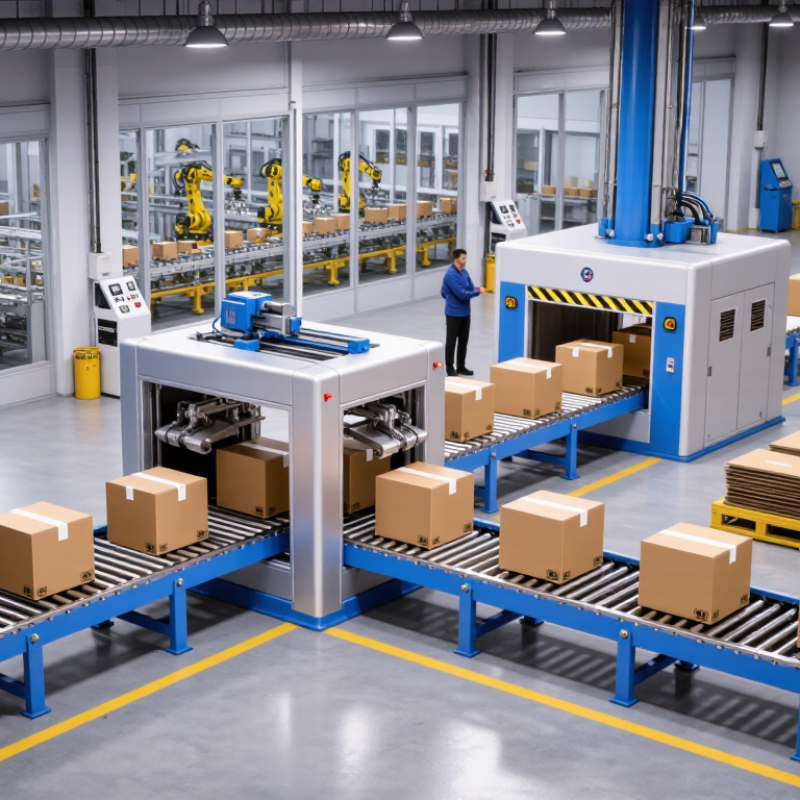
A combi case erector turns flat corrugated blanks into open, squared cases. An operator loads blanks into a magazine, where guides keep them aligned. A vacuum cup or gripper picks one blank and draws it into the forming station. Mechanical arms square the panels, while the machine folds the bottom flaps. Tape or hot-melt adhesive then seals the base. The finished case moves onto a conveyor for filling. Small details matter.

Sensors check blank position and case flow, helping prevent jams and misfeeds. If a blank is warped, damp, or poorly stacked, the machine may pause or form a crooked case. PMMI’s 2023 State of the Industry report put U.S. packaging machinery shipments at about $10.5 billion in 2022. That figure reflects the wider machinery sector, not combi erectors alone. It does, however, show why dependable case handling matters on busy packaging lines. In real operation, setup still takes attention; automation does not remove every adjustment.

Tips: Keep blanks dry and square in the magazine. Set guides to the actual case dimensions, then test several cases before production. Watch the first sealed bottoms for loose tape, uneven folds, or crushed corners.

How a Combi Case Erector Operates

This illustrative sequence shows common case-erecting stages: feed a flat blank, pick and open it, square the case, fold the bottom flaps, then seal and discharge it. Exact mechanisms and sequences vary by machine configuration. The step numbers show order, not cycle time or machine performance; choosing a manufacturer requires comparing requirements such as case range, speed, changeover, and support.

What Qualities Distinguish Leading Chinese Manufacturers?

Who Is the Best Combi Case Erector Manufacturer in China?

What Qualities Distinguish Leading Chinese Manufacturers?

Leading Chinese combi case erector manufacturers stand out through stable performance, clear engineering, and responsive after-sales service. PMMI’s 2024 State of the Industry report estimated U.S. packaging machinery shipments at about $10.9 billion in 2023, reflecting strong demand for reliable automation. That figure provides market context, not proof that a particular machine suits your line.

A capable supplier tests your carton blanks, records output and jam rates, and clearly states supported case dimensions. Ask for a factory acceptance test using your board grades. Thin or warped blanks can reveal weak vacuum pickup or poor case squaring. Check changeover time, spare-part lead times, electrical documentation, and remote support response. Compare performance over a sustained run, not a brief demonstration. Not enough? Request the test data.

Tips: Send samples in several sizes before requesting a quote, including your smallest and largest cases. Ask for written test criteria, target output, rejection limits, and service contacts. Confirm conveyor height and PLC communication before installation. No manufacturer is perfect; early tuning may be needed. Pay attention to how openly the supplier documents problems and fixes.

Which Chinese Manufacturers Offer Combi Case Erectors?

Chinese combi case erectors are offered by packaging-machinery manufacturers and end-of-line system integrators, with supplier clusters in Guangdong, Zhejiang, and Jiangsu. Some build standard machines for common carton sizes; others engineer equipment around a customer’s blank dimensions, production speed, and sealing method. Their capabilities differ, so “combi” should be clarified before comparing quotations. Ask whether the machine only forms and seals cases or also connects with a case packer and conveyor line.

Details matter. A useful supplier will discuss board thickness, blank storage, changeover time, and how the machine detects a misfed carton. Request a live test using your actual blanks, not only a demonstration with ideal samples. Watch the suction cups pick up each flat blank, and check whether folded flaps sit squarely before sealing. Ask for cycle-rate data, a maintenance schedule, spare-parts availability, and references from similar production lines. A polished brochure is not proof of stable output. One practical weakness: test conditions rarely match a busy factory floor exactly. Record the setup and acceptance criteria in writing, then compare several manufacturers on the same requirements.

How Can Buyers Compare Manufacturers and Models?

Comparing combi case erector manufacturers starts with the cartons your line actually uses. Record the smallest and largest case dimensions, board grade, flap style, and required output. A machine that handles one carton smoothly may struggle when a second size is introduced. Ask for changeover time, adjustment points, and whether settings are repeatable after a shift change. Small details matter.

Compare models under realistic conditions, not only at their advertised speed. Request a run using your own cases, tape or adhesive, and target rate. Watch for skewed blanks, weak folds, jams, and how often an operator must intervene. That matters. Also check footprint, loading access, control simplicity, and compatibility with upstream conveyors. A fast machine is less useful if it creates a bottleneck downstream.

Manufacturer support deserves the same scrutiny as machine performance. Ask what spare parts are stocked, how remote troubleshooting works, and what training operators receive. Clarify warranty coverage and response expectations in writing. References from facilities with similar carton sizes can reveal practical strengths and limitations. I would not rely on a polished demonstration alone; it can miss awkward changeovers or inconsistent board quality. Even a careful test cannot predict every shift condition, so leave room for questions.

Who Is the Best Combi Case Erector Manufacturer in China? - How Can Buyers Compare Manufacturers and Models?

There is no universal “best” manufacturer or machine for every buyer. Compare suppliers using the same case samples, operating conditions, acceptance criteria, and documented specifications. The configurations below are generic machine types, not manufacturer or brand listings.

Generic Combi Case Erector Configurations
Configuration to Compare Typical Operating Concept Potential Advantages Points to Verify
Automatic erector with manual adjustments The machine opens and forms corrugated case blanks automatically; an operator adjusts guides or settings when changing case formats. Can suit production using a limited number of case sizes and straightforward changeovers. Adjustment steps, changeover time for the buyer’s cases, required tools, and whether settings are repeatable.
Automatic erector with recipe-based or powered adjustments Format settings may be stored or adjusted through powered mechanisms, depending on the machine design. May reduce manual adjustment work when production frequently switches between supported formats. Which axes adjust automatically, recipe limits, changeover procedure, and whether operator confirmation is still required.
Integrated case erector and bottom sealer Case forming and bottom-flap sealing are combined in one machine or coordinated assembly. Can reduce separate handling and simplify the connection between forming and sealing steps. Supported sealing method, case-size range, access for replenishing tape or adhesive, and how jams are cleared.
Separate case erector and case sealer The erector and sealer are separate machines connected by conveyor or a transfer section. Allows buyers to evaluate or service forming and sealing equipment as distinct process steps. Transfer reliability, line controls, footprint, conveyor speed matching, and responsibility for system integration.
Manufacturer and Model Comparison Checklist
Comparison Dimension What Buyers Should Record Evidence to Request or Test
Case compatibility Minimum and maximum case length, width, and height; blank style; board grade; and any stated limitations. Written specification sheet and a production trial using the buyer’s actual case blanks.
Output rate Rated cases per minute and the case size, material, and operating conditions used for that rating. Timed acceptance test with agreed conditions; distinguish rated speed from sustained production output.
Changeover Number of formats supported, adjustment points, tools required, and changeover procedure. Observed changeover between two of the buyer’s case sizes, with elapsed time recorded.
Bottom sealing Sealing method, consumable type, closure quality, and access for replenishment. Trial cases inspected for consistent flap closure and seal placement; written consumable requirements.
Reliability and safety Jam detection, fault messages, guarding, emergency stops, and access for cleaning or maintenance. Safety documentation, maintenance instructions, and a demonstration of common fault recovery.
Utilities and installation Electrical supply, compressed-air requirements if applicable, machine dimensions, and connection points. Utility and layout drawings checked against the buyer’s site conditions.
Controls and integration Control interface, available signals, and compatibility with upstream or downstream equipment. Interface list, wiring or communication documentation, and an integration review with the line team.
Service and spare parts Support coverage, response arrangements, recommended spare parts, and documentation language. Written service terms, spare-parts list, and confirmation of technical support arrangements for the buyer’s location.
Commercial and lifecycle cost Machine price, installation, training, consumables, maintenance, and warranty conditions. Comparable quotations using the same scope, delivery terms, acceptance criteria, and warranty assumptions.
Suggested Buyer Scoring Template
Criterion Suggested Weight Score for Each Quoted Model Scoring Guidance
Case compatibility and forming quality 25% 1–5 Score using the buyer’s case samples and agreed quality checks.
Verified production performance 20% 1–5 Use a witnessed test under comparable operating conditions.
Changeover and operator workload 15% 1–5 Compare observed changeover steps, time, and required operator actions.
Safety, maintenance, and reliability provisions 15% 1–5 Assess documentation, access, fault recovery, and maintainability.
Integration and installation fit 10% 1–5 Check utilities, footprint, controls, and connection to adjacent equipment.
Service, spare parts, and training 10% 1–5 Score only against written support commitments and the buyer’s needs.
Total cost and commercial clarity 5% 1–5 Compare quotations with equivalent scope and clearly stated exclusions.
Total 100% — These weights are a starting point; buyers should adjust them to their production priorities.

For a fair comparison, ask every supplier to quote against the same case specifications and acceptance test. Treat unverified speed claims, compatibility statements, and service promises as items to confirm before purchase.