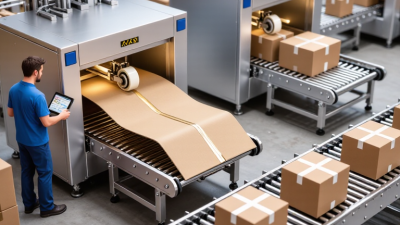
China Top 10 Box Taping Machine Manufacturers

Selecting a Box Taping Machine manufacturer involves more than comparing catalog prices. Carton sizes, tape width, sealing speed, and line layout all affect whether a machine fits daily production. A compact semi-automatic unit may suit varied orders, while a powered conveyor model can support steadier carton flow. Small details matter.

This introduction to China’s top 10 Box Taping Machine manufacturers is intended to help buyers compare suppliers with practical questions in mind. Review each company’s product range, customization options, quality-control process, spare-parts availability, and after-sales support. Ask for specifications that match your carton dimensions and production conditions. A clear test video can reveal how cartons enter, seal, and exit the machine. Request references where possible, and confirm what installation and commissioning include.

Published information does not always show how equipment performs after months of use. That gap deserves attention. Buyers should verify claims directly and clarify warranty terms, delivery schedules, and technical support before placing an order. A machine can look efficient in a brochure yet require adjustments on a real packaging line. It happens. This guide provides a starting point, not a substitute for factory checks or a production trial. The strongest choice is usually the supplier that explains limitations clearly, answers detailed questions, and can demonstrate a suitable machine under relevant operating conditions.
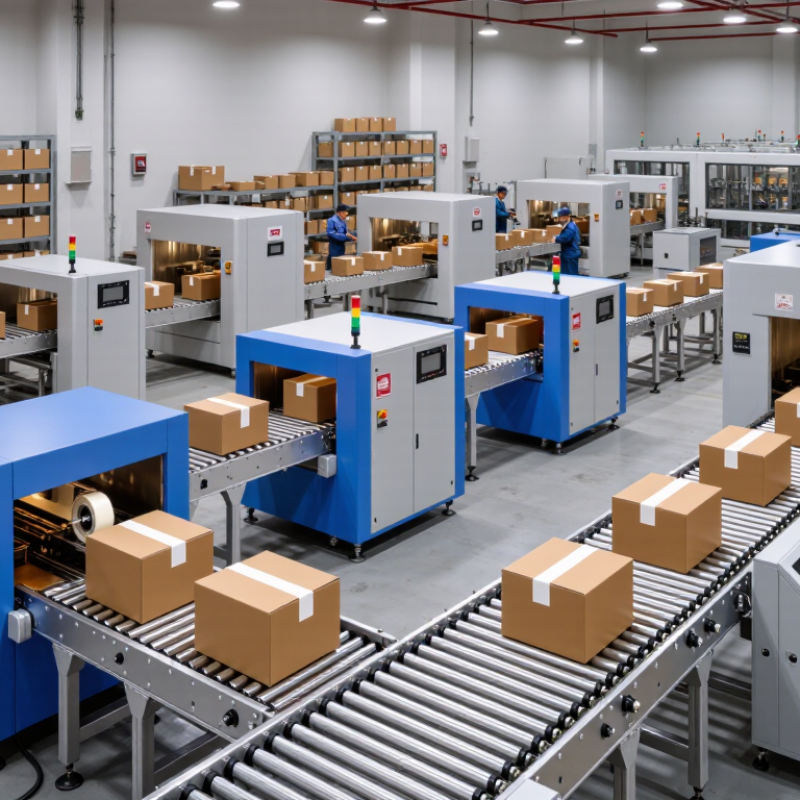
China Top 10 Box Taping Machine Manufacturers

What Box Taping Machines Are and How They Are Used

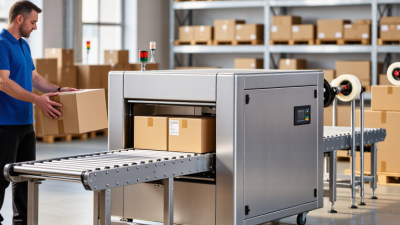
A box taping machine seals corrugated cartons with pressure-sensitive tape, usually across the top, bottom, or both. An operator places a filled carton on a conveyor or guides it through a semi-automatic unit. Belts move the box beneath tape heads, which apply tape and press it onto the panels. Some systems adjust to different carton heights; others need manual setup for each size. That matters.

In a packing area, a properly adjusted machine can make seals more consistent and reduce repetitive hand taping. Staff should center each carton, check tape tension, and keep rollers clear of dust or adhesive residue. Uneven flaps or overfilled cartons can cause tape to wrinkle or lift at the corners. A quick visual check still helps. Automation is useful, not magic.

When comparing machines from manufacturers, consider carton size range, line speed, changeover time, and available floor space. A compact unit may suit a small shipping room, while a busy line may need powered conveyors and faster adjustments. Actual output depends on carton quality, operator habits, and maintenance, so published speed figures need context. Speed alone is a weak measure; a machine that struggles with smaller cartons can create more rework.

How China’s Box Taping Machine Industry Has Developed

China’s box taping machine industry has developed in step with expanding manufacturing, warehousing, and parcel distribution. Many early machines were simple semi-automatic units. Operators placed cartons by hand and adjusted guides for each box size. As production needs grew, manufacturers began adding automatic flap folding, powered drives, and more consistent tape application.

Today, machines may include PLC controls, photoelectric sensors, adjustable side belts, and quick-change settings. These features help reduce repetitive adjustments across different carton dimensions. On a busy packing line, a sensor can detect a carton’s position while rollers guide it beneath the tape head. The practical result is steadier sealing, though performance still depends on carton quality, setup, and maintenance. Progress is not uniform.

Development has also shifted toward easier integration with conveyors and other packaging equipment. Some factories prioritize compact frames for limited floor space; others need higher throughput and fast format changes. A faster machine is not always the better choice. Tape waste, jam frequency, operator training, and access to spare parts matter too. There is room for improvement: published specifications do not always reveal how a machine handles worn cartons or a long production shift. Real trials help buyers judge whether a design fits their workflow.

Criteria for Selecting Leading Chinese Manufacturers

Selecting a leading Chinese box taping machine manufacturer starts with matching equipment to real carton sizes and line conditions. Record carton length, width, height, tape width, and required output before comparing quotations. Ask whether the machine handles uneven boxes, recycled board, and frequent size changes. These details matter on a busy packing line. A demonstration should use cartons close to your own, not only clean, uniform samples. Watch tape placement, flap alignment, and jams during a sustained run. Small faults add up.

Check how the manufacturer tests machines and documents results. Request clear acceptance criteria, such as sealing consistency, changeover time, and operating speed under stated conditions. Ask for a parts list, maintenance schedule, and response times for remote or on-site support. Verify that any claimed quality certificates apply to the actual factory and product scope. A polished brochure can still leave gaps. No checklist catches everything. Compare the written specification with what you observe, and clarify who pays for replacement parts or travel if support is needed. A sample run is useful, but it cannot predict every shift, operator, or carton variation. Keep that uncertainty in the evaluation.

China Top 10 Box Taping Machine Manufacturers - Criteria for Selecting Leading Chinese Manufacturers

No. Selection Criterion What to Verify Practical Comparison Method
1 Carton Size Range Minimum and maximum carton length, width, and height supported by the quoted machine configuration. Compare the stated range with actual production cartons, including the smallest and largest regularly used sizes.
2 Carton and Load Compatibility Supported carton styles, board condition, product load, and whether cartons must arrive with their top flaps folded. Ask the supplier to confirm suitability using carton samples or detailed carton specifications.
3 Throughput Performance Quoted operating rate and the conditions under which it is achieved, including carton size, operator input, and line layout. Request a demonstration using representative cartons; compare sustained operation rather than an unsupported maximum-speed claim.
4 Tape Compatibility Supported tape width, roll dimensions, tape material, and any stated limits for tape thickness or adhesive type. Check the machine specifications against the tape already used or planned for the packaging line.
5 Changeover and Adjustment Whether adjustment for different carton sizes is manual, tool-assisted, or automated, and which settings need to be changed. Ask for a changeover demonstration between two carton sizes used in the facility.
6 Construction and Maintainability Frame and component specifications, access to wear parts, lubrication requirements, and availability of maintenance documentation. Review drawings, parts lists, maintenance instructions, and access to service points during a machine inspection.
7 Controls and Line Integration Control configuration, available interfaces, sensor requirements, and compatibility with upstream or downstream equipment. Provide the proposed line layout and interface requirements for a technical review before placing an order.
8 Safety and Compliance Documentation Machine guarding, emergency-stop arrangements, electrical documentation, risk information, and certifications applicable to the destination market. Request current documentation for the exact machine configuration and confirm that it meets the buyer's local requirements.
9 Factory Testing and Acceptance Whether testing can use the buyer's cartons and tape, and how operating performance, adjustments, and open issues will be recorded. Agree on a written factory acceptance test plan with defined samples and acceptance conditions before production begins.
10 After-Sales Support and Spare Parts Warranty terms, technical support channels, spare-parts identification, service response arrangements, and documentation language. Obtain written warranty and support terms, a recommended spare-parts list, and a clear process for requesting technical assistance.

Comparison note: Machine performance and suitability depend on the exact model, configuration, cartons, tape, and production conditions. Verify specifications and acceptance criteria in writing for each quotation.

Profiles of 10 Notable Box Taping Machine Manufacturers in China

China’s box-taping machine suppliers differ more by engineering focus than by headline speed. One profile builds compact semi-automatic units for small workshops; another specializes in top-and-bottom sealing lines. Others target random-sized cartons, heavy cases, printed tape, or rapid changeovers. Some integrate weighing and labeling, while others prioritize conveyor synchronization or customized line layouts. The remaining profiles focus on export-oriented equipment, maintenance access, and lower-cost standard models. These are useful distinctions, though a supplier may fit more than one category.

Demand gives this market practical weight. China’s State Post Bureau reported 132.07 billion express parcels in 2023, up 19.4% year over year. The International Federation of Robotics’ World Robotics 2024 report recorded 276,288 industrial robot installations in China in 2023. That automation context makes line compatibility worth checking, not assuming. Ask manufacturers for cycle-time tests using your carton sizes, tape width, and conveyor speed. Watch a changeover in person. Small details matter.

A strong profile also includes accessible wear parts, clear fault messages, and realistic service response times. Inspect tape tension, cut quality, and carton alignment on an actual production run. A fast machine can still create stoppages if cartons vary. And specifications rarely show the whole story. Compare operating noise and jam recovery, too; buyers sometimes overlook both. One limitation remains: published performance figures may use different test conditions, so direct comparisons can be imperfect.

China Box Taping Machines: Typical Carton-Sealing Workflow

A typical automatic top-and-bottom carton sealer handles these steps in sequence. The values show step order, not manufacturer performance or market rankings.

How to Compare Manufacturers’ Products and Services

Comparing box taping machine manufacturers requires more than matching prices and advertised speeds. Start with the cartons you actually use: measure their length, width, and height, then test the machine with different board thicknesses and tape widths. A machine that seals one sample neatly may struggle with a lighter carton or a slightly uneven flap. Watch the tape head during a trial run. Does it press tape firmly across the top and bottom, or leave loose edges that need hand correction? Small details matter.

Ask each manufacturer for clear operating limits, changeover instructions, and maintenance intervals. Check whether operators can adjust guides without special tools, and whether replacement blades, rollers, and tape heads are readily available. Service matters. Request a written response-time commitment, installation support, and practical training for your shift team. If possible, run several cartons in a row, not just one. Note jams, noise, and how long adjustments take. The lowest quote can look attractive, but unclear service terms may cost time later. I would still compare the numbers carefully; a polished demonstration is not the same as a reliable workday.